


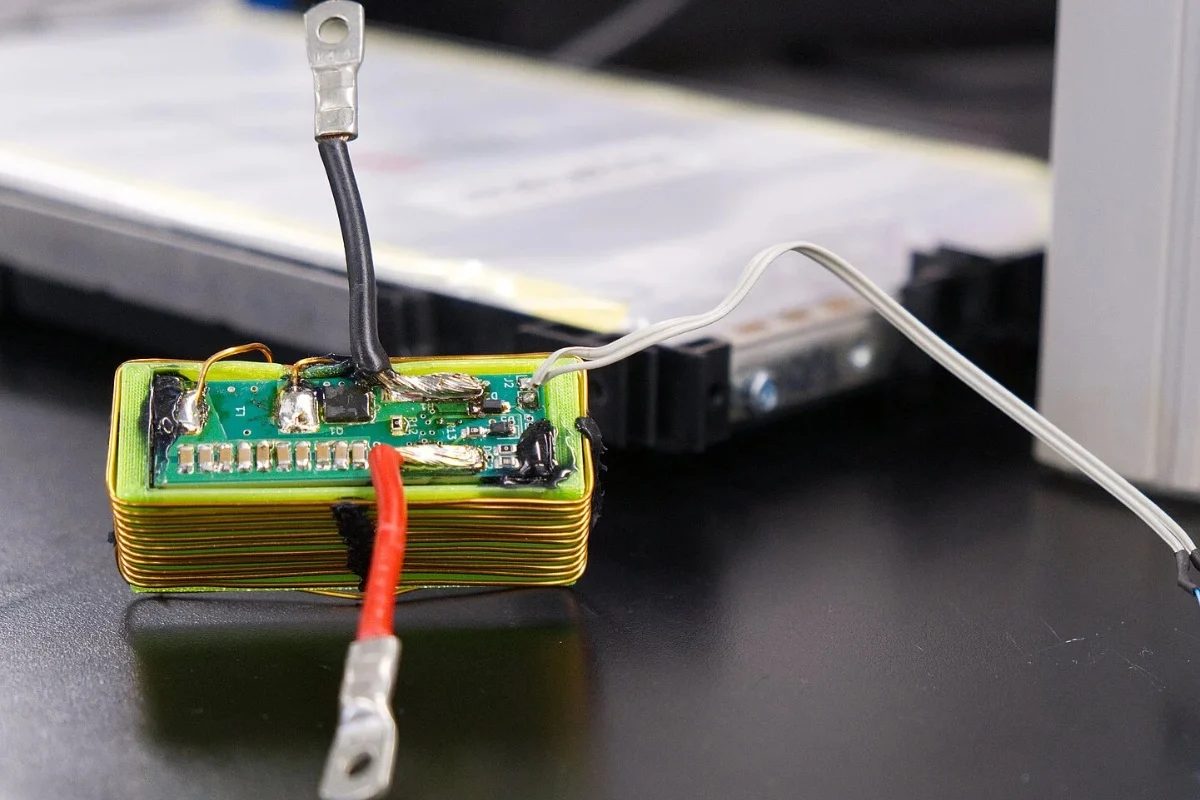

Researchers at the University of Kiel have developed a „talkative battery“ concept that transmits measurement data from inside a battery cell using its existing power connections. This eliminates the need for additional communication cables or electronics, simplifying design and saving space.
The system utilizes the battery’s power electronics to relay vital internal conditions, such as temperature, which often change critically within the cell before affecting its surface. This method could reduce costs by around 35% compared to conventional sensor solutions. The communication principle isn’t limited to temperature, potentially supporting pressure or gas sensors. Future applications include electric vehicles, energy storage, and accelerating battery research and development.
Researchers at the University of Kiel have developed a concept that transmits measurement data from inside a battery cell via the existing power connections. No additional communication cables are required. Instead, the system uses the power electronics already responsible for controlling the battery’s charging and discharging processes, according to the researchers. The team describes its project as a “talkative battery”, as it independently transmits information about its condition to external systems. The results have now been published in the journal Communications Engineering.
Until now, temperatures in battery systems have primarily been measured on the outer surface of the cells. However, critical changes such as rising temperatures or gas formation often begin inside the cell. While sensors can, in principle, be integrated there, they have previously required additional electronics and data cables, which occupy space and complicate the design. The Kiel research team has addressed this challenge by integrating a compact electronic circuit directly into the battery cell. This circuit digitises the readings from a temperature sensor and transmits them via the same connections used for charging and discharging the battery. According to an initial cost estimate, the method could reduce expenses by around 35 per cent compared to conventional solutions that rely on separate sensor cables.
The research team states that the communication principle is not limited to temperature sensors. In the future, pressure, gas, or other sensors could also transmit data from inside the cell in the same way. The developers envision long-term applications in electric vehicles, stationary battery storage systems, and wind and solar energy installations. Additionally, the method is expected to accelerate the research and development of new battery materials and cell concepts.

Hinweis: Externer Inhalt von https://www.electrive.com/2026/07/09/university-of-kiel-develops-battery-sensor-based-communication-system/. Rechte bei den jeweiligen Urhebern. » Mehr… » Melden