



Published May 19, 2026 11:32AM
Do you frequently find yourself saying “yes” when you mean “no”? If so, you’re (unfortunately) familiar with the concept of people pleasing. You’ve likely learned that beyond being a psychological term, people pleasing can be an exhausting game of physical survival. You aren’t just “being nice.” You’re operating like an open-door policy, concerned that the moment you speak your mind or place your needs before those of others, you’ll be labeled selfish or difficult.
It turns out, boundaries (or the lack thereof) aren’t only psychological; there’s also a physical component. It’s that anxious knot in your stomach when you hear the ping of a text followed by a mental panic of how to fix someone else’s problem, usually at your expense. You can read all the self-help books about boundaries, but your body remembers. Which is why moving past your tendency to people please can (and should) involve literally moving through it.
Yoga can help. Learning to set boundaries and move past being a people pleaser is more than just drawing lines drawn in conversations. It’s something that’s built from the inside out, starting with the physical space you allow yourself to occupy.
The Science Behind Creating Boundaries
Research shows that strengthening your proprioception, or your understanding of where your body is in space, can change your brain’s map of where you end and the world begins. This physical clarity supports creating psychological boundaries by essentially telling your nervous system, “I have a perimeter.”
“Part of growing up and developing a sense of self is learning boundaries—specifically, understanding where you end and another person begins,” explains Sandra L. Caron, Ph.D., LCPC, Professor Emerita of Family Relations and Human Sexuality at the University of Maine. “This awareness helps you hold onto your values and beliefs (hold your space) and makes you less vulnerable to manipulation.”
When you engage in anything that supports proprioception, you practice the physical version of what Caron describes. In mind-body practices, setting a boundary typically begins with physical experiences. For example, when you practice pushing movements in yoga, you engage in isometric contraction, which is holding tension in a muscle without engaging in any movement. Research on motor-patterning suggests that these movements help the brain practice assertive behavior. By physically pushing yourself away from the floor or pushing against the space around you, you build neural pathways that could also support you saying “no” and minimizing your former people-pleasing ways.
How to Stop Being a People Pleaser With Yoga
From a yogic perspective, creating and maintaining boundaries with others is considered a physical exploration of asteya, or non-stealing. This principle reminds us that when we fail to say “no,” we allow others to steal our energy. We also steal from our sense of integrity. The converse also applies in terms of respecting others’ boundaries.
Just as you can use specific yoga poses to process anger or feel unstuck, you can use your yoga mat to practice the physical sensation of holding boundaries. By moving through the following shapes and focusing on your surroundings, you practice the somatic skill of “holding your space.” It’s a physical reminder that you have the right to take up and safeguard your space.
And by physically training your body to strengthen its ability to stop being a people pleaser, you teach your mind to respect them as well. Consider your yoga mat your training ground to physically sketch out what this feels like for you.
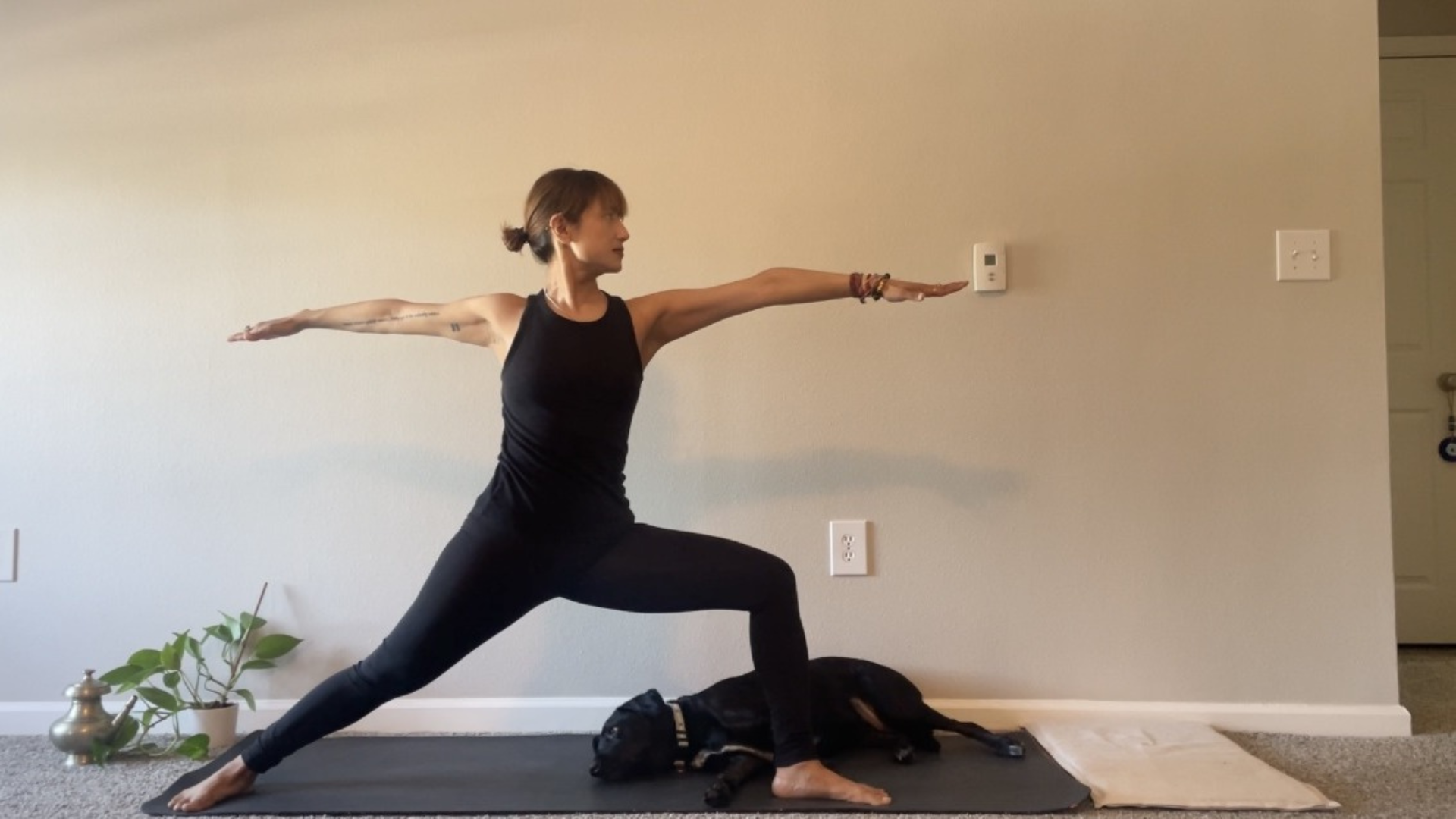
1. Warrior 2 (Virabhadrasana II)
 (Photo: Anjana Rajbhandary)
This pose reminds you to claim the space extending in all directions around your body. Think of it as a somatic declaration of your boundaries and your desire to no longer be a people pleaser.
How to: From standing, step your feet about four feet apart while facing the long side of the mat. Turn your right toes toward the short side of the mat and angle your left toes slightly inward. Bend your right knee and keep your back leg straight. With your chest facing the long side of the mat, reach your arms straight out from your shoulders, parallel to the mat, actively stretching from your heart center out through your fingertips in Warrior 2. Keep your gaze steady over the front middle finger of your right hand. Focus on your breath for 10-20 seconds. Then switch sides.
Focus on: This pose acts as your perimeter. Reach through your fingertips as if marking the edges of your personal zone. Take note of your boundaries. Nothing infringes on this space without your permission.
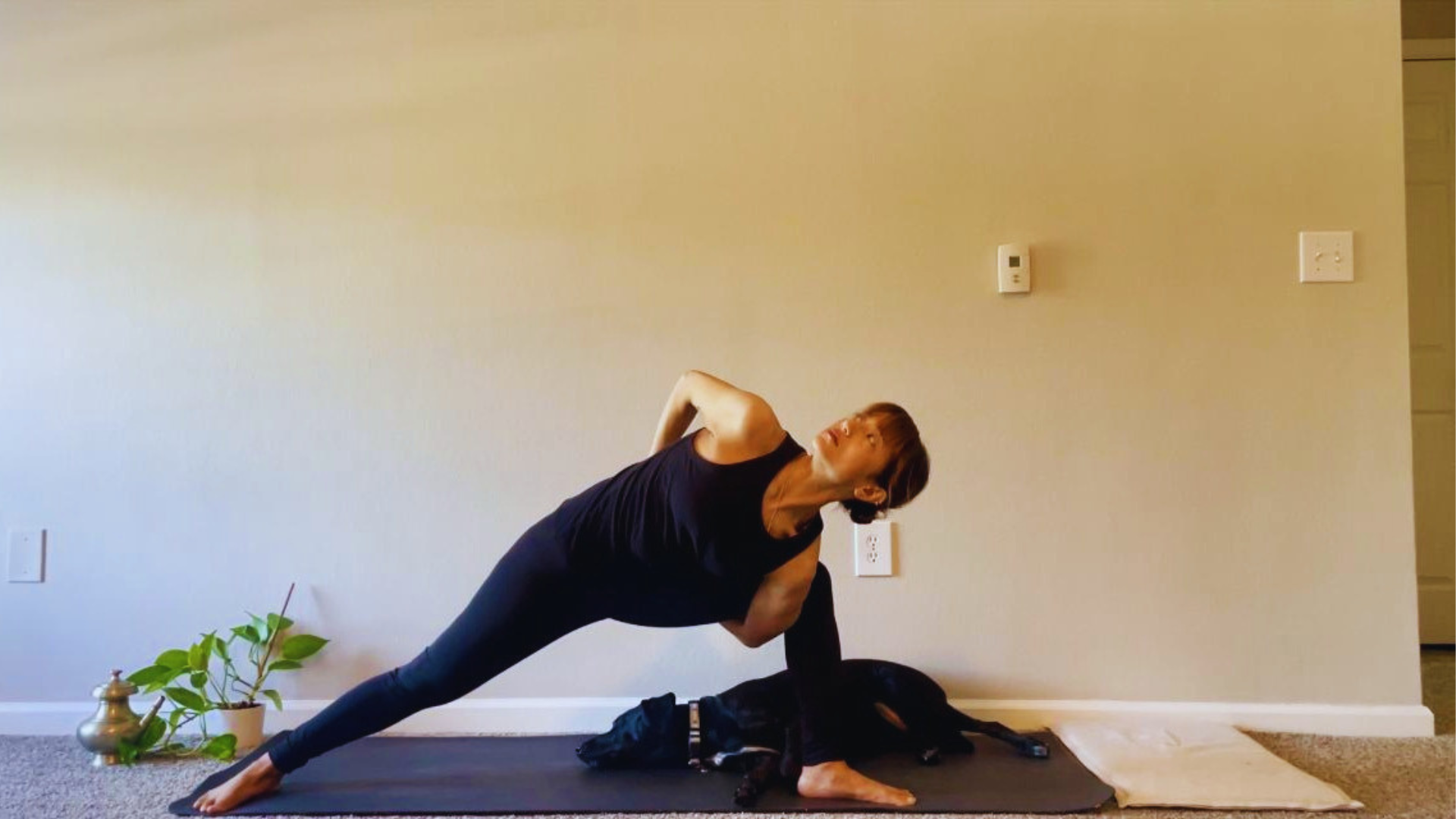
2. Extended Side Angle with a Bind (Baddha Utthita Parsvakonasana)
 (Photo: Anjana Rajbhandary)
When you bind with your arms, you literally close the loop on your own power. Think of it as choosing to keep your energy contained rather than releasing it to those who haven’t earned it.
How to: From Warrior 2, place your front hand on the mat or a black inside your front foot in Extended Side Angle. Reach your top arm behind your back, palm facing away from you. Reach your bottom arm under your front thigh to clasp your hands or touch your fingertips. You can use a strap, towel, or long-sleeve shirt to bridge the distance between your hands if needed. Roll your top shoulder back to open your chest toward the side wall. Stay here for 3–5 breaths. Then switch sides.
Focus on: What does it feel like to be entirely self-contained? If the bind feels too constrictive, can you release the bind a little without completely letting go?
3. Gate Pose (Parighasana)
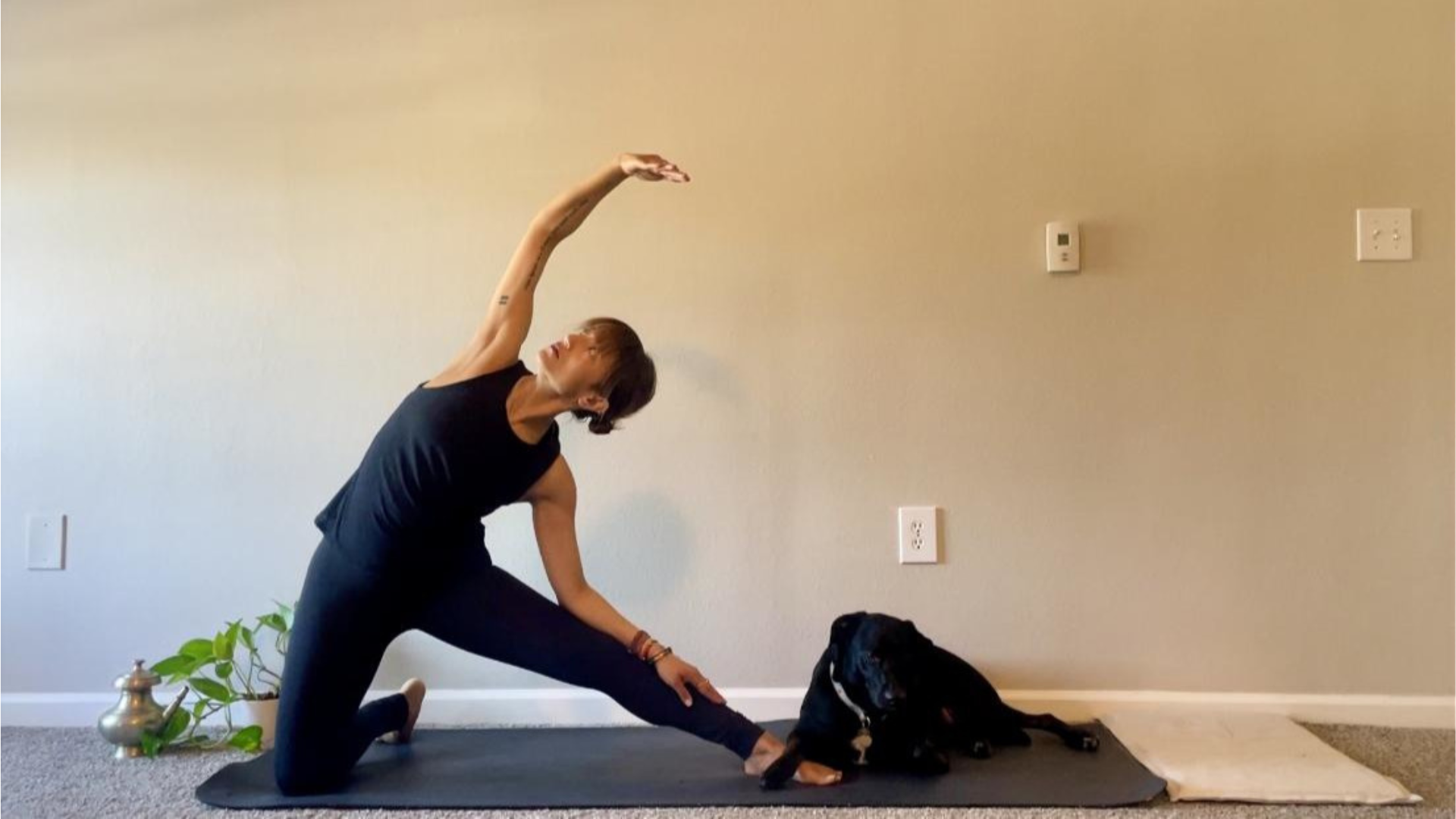 (Photo: Anjana Rajbhandary)
This stretch reminds you that a strong boundary doesn’t need to be rigid and unmovable. It can be flexible and bend, as needed, without breaking as you adapt to situations. Your boundaries can be adjusted—but only by you.
How to: Begin by kneeling on your mat. Extend your left leg straight out to the side, off the mat. Press the sole of your foot into the floor with your toes pointing forward in the same direction as the front of the mat. As you inhale, raise your right arm. As you exhale, lean your torso toward the left and slide your left hand down your extended leg in Gate Pose. Keep your chest broad and facing forward rather than collapsing toward the floor. Stay here for 5-10 breaths. Then switch sides.
Focus on: As you breathe into your side ribs, think of expanding your boundary with a person or a situation. As you breathe out, think of contracting the boundary a little.
4. Side Plank (Vasisthasana)
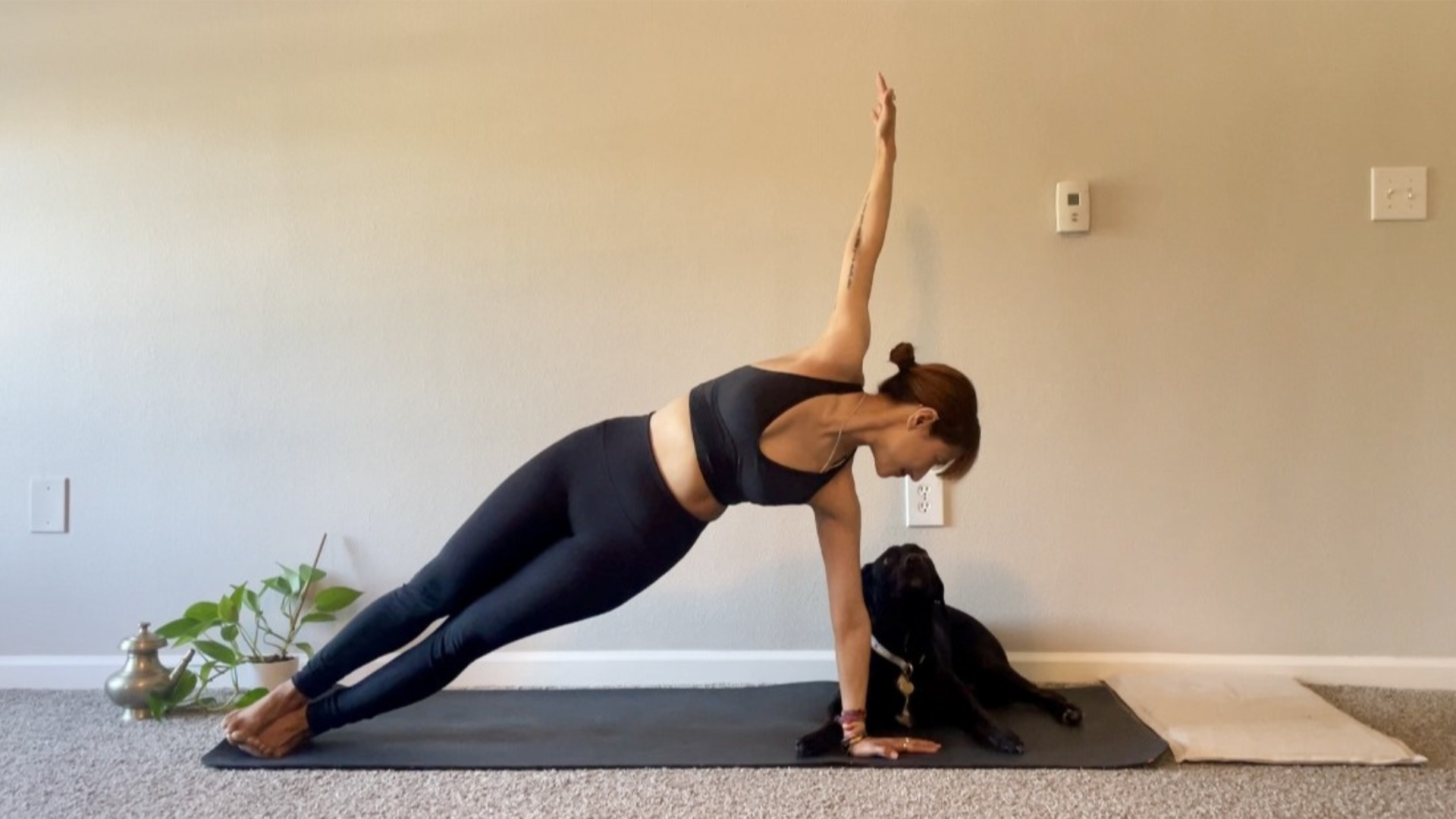 (Photo: Anjana Rajbhandary)
When you strengthen your side body, you practice reinforcing resilience in places where you might unknowingly experience weakness. Think of it as a metaphor for places in life where you might be leaking energy to others.
How to: From Plank Pose, bring your feet together. Shift your weight into your right hand and start to rotate your body to face the left side of the mat as you stack your left foot on top of your right. Place your left hand on your left hip or reach your left arm toward the ceiling, creating a T shape with your arms in Side Plank. Lift your hips away from the mat. If you need more stability, bring your bottom knee to the mat for support or bring your left foot on the mat in front of your right foot. Stay strong here for 3–5 breaths. Come back to Plank and switch to the other side.
Focus on: Feel your side body and outer hips fire up and help you resist gravity. Imagine these parts of your body as resilient and protective of everything within you.
5. Goddess Pose (Utkata Konasana or Deviasana)
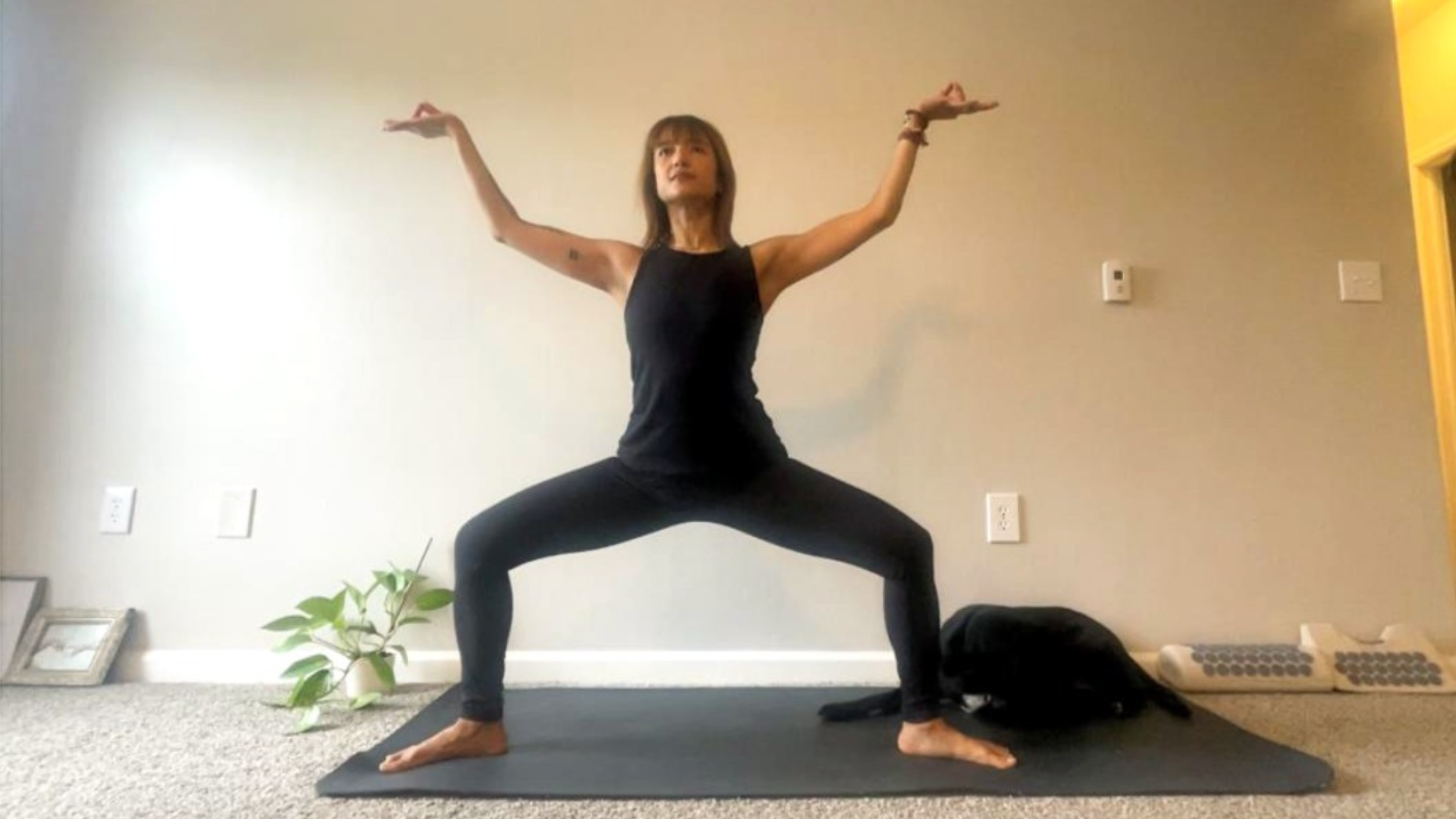 (Photo: Anjana Rajbhandary)
The pushing movement of your hands allows you to rehearse the physical act of saying no. As it becomes familiar, you might find yourself saying no more readily in your everyday life.
How to: Stand with your feet wide apart and angle your toes outward toward the corners of your mat. Bend your knees deeply, sinking your hips toward your knees. Ensure your knees stay aligned over your toes. Keep your chest upright with a neutral back. Bring your hands to your chest, then as you exhale sharply, push your palms forward and away from your chest with force, as if you’re moving a heavy wall away from you. Stay in the strong squat for 5-10 breaths.
Focus on: Feel into the sensation of moving something away from you. This is the physical equivalent of saying no without needing to apologize.
Ref: https://www.yogajournal.com/practice/people-pleaser-yoga-practice/