



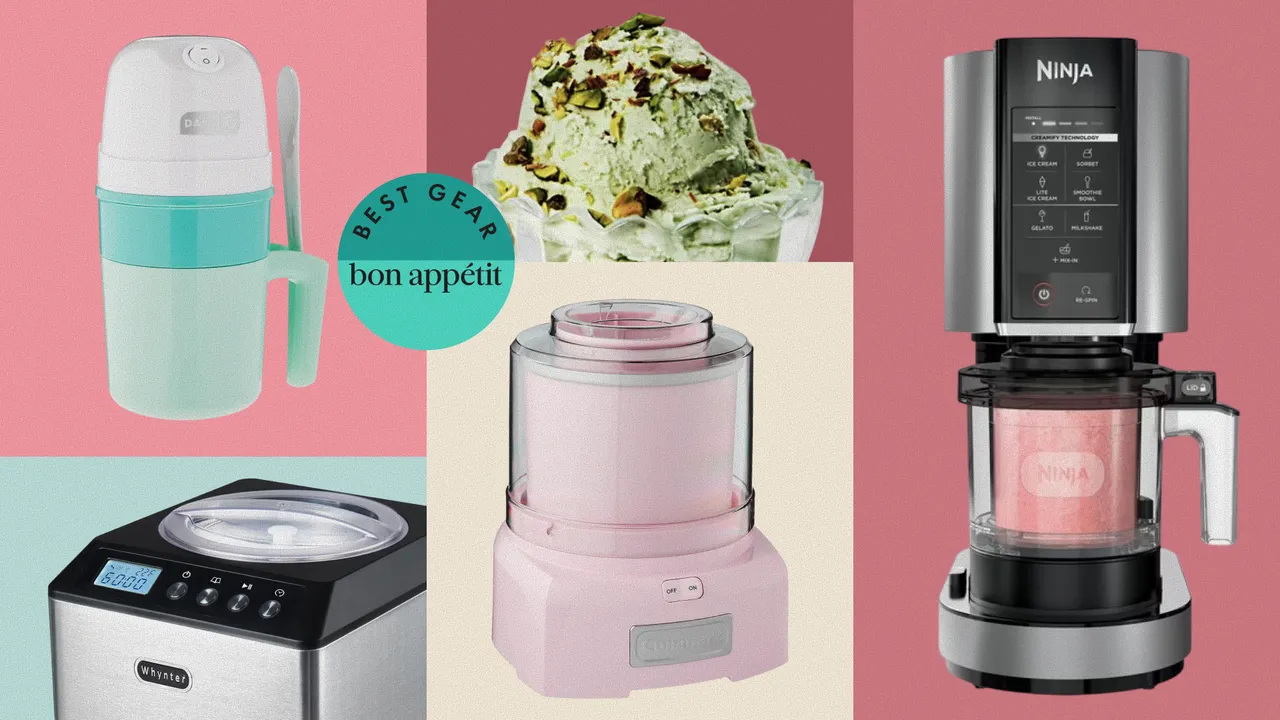

It may look like a toy, but don’t let the pastel colors fool you: This fun-sized canister-style machine from DASH makes some pretty impressive ice cream with the touch of a button. If you dream of making ice cream at home but don’t have the space, budget, or need for a full-sized model, this is the machine for you.
What we love: In our testing, we loved how easy to assemble and operate the DASH was. The canister sits inside a cup, and the paddle slots into the motor, which doubles as a lid. As with the Cuisinart, there’s a single switch that turns the device on and off. When your ice cream is ready, just lift the lid off and transfer to a storage container.
This model has a smaller capacity than others on this list (about a pint), but that makes it possible to have a smaller footprint. The canister needs to be frozen at least 24 hours in advance, but our testers found that its size made it easier to wedge into a crowded freezer.
Like most of the models we tested, the DASH is hand wash-only. Luckily, you’ll only need to clean the mixing canister and the paddle, both of which wash up easily with soap and water. At around $20 at the time of publication, it’s a steal for a highly functional machine that makes high-quality ice cream.
What we’d leave: This machine took about 30 minutes to churn a batch of ice cream to the proper consistency—10 minutes longer than the Cuisinart. There’s also no way to see into the machine while it’s running, so you have to stop the motor and take the lid off the bowl to check your ice cream’s progress. That process can be messy and degrade the texture of the final product.
Last, the small capacity (about a pint) means you’ll need to adjust standard ice cream recipes. Make sure to only fill the canister about 60% of the way or you’ll have an overflowing mess on your hands.
How we tested the best ice cream makers
To test the ice cream makers, we made a lot of ice cream (obviously). For the regular ice cream makers, we used the exact same base recipe for each machine (using a kitchen scale to measure our ingredients for ultimate precision). We cooled each base to room temperature, refrigerated it overnight to reach 40°F, and then churned it in each ice cream maker according to the manufacturer’s instructions to soft-serve consistency.
For the soft serve ice cream makers, we made vanilla ice cream bases according to the recipes supplied by each manufacturer, and chilled or froze them overnight, depending on their respective recipe booklets‘ instructions.
We took note of how long each model took to reach soft serve consistency. And of course, we taste-tested each batch to compare ice crystal formation, aeration, and overall texture and mouthfeel.
For the Ninja CREAMi and its non-churning counterparts, we made a batch of vanilla ice cream according to each manufacturer’s recipe.
After our initial ice cream test, we narrowed down the field to our top contenders and played around with other frozen desserts like sorbet and frozen yogurt. We also tested each compressor machine’s ability to churn consecutive batches of ice cream.
Ref: https://www.bonappetit.com/story/best-ice-cream-maker