


Laser-powered lightsails, an elegant concept for fuel-free interstellar travel, are facing a new theoretical challenge. Research by Chao Shen and Jiaze Li suggests that at relativistic speeds, lightsails encounter a „hidden propulsion problem.“ As the sail accelerates, Doppler effects reduce the frequency of incoming light, diminishing thrust from direct push and reflection. Crucially, around 75% the speed of light, diffuse scattering can shift from contributing propulsion to becoming an active drag force, significantly reducing efficiency. This theoretical finding adds another complex constraint for mission designers. However, the lightsail dream isn’t abandoned; advanced materials might offer solutions, though numerous other engineering hurdles persist.
Laser-powered lightsails are one of the coolest answers to spaceflight. It might not be as sci-fi-sounding as a warp drive, but now, its practicality has also come under question. Using lightsails, a spacecraft could unfurl an ultra-thin reflective sail and let a powerful laser push it toward another star, without relying on fuel.
The tech was simple and elegant–except it’s also more complicated than it sounds. A new preprint from researchers Chao Shen and Jiaze Li of the Harbin Institute of Technology suggests that relativistic lightsails may run into a hidden propulsion problem once they start moving extremely fast.

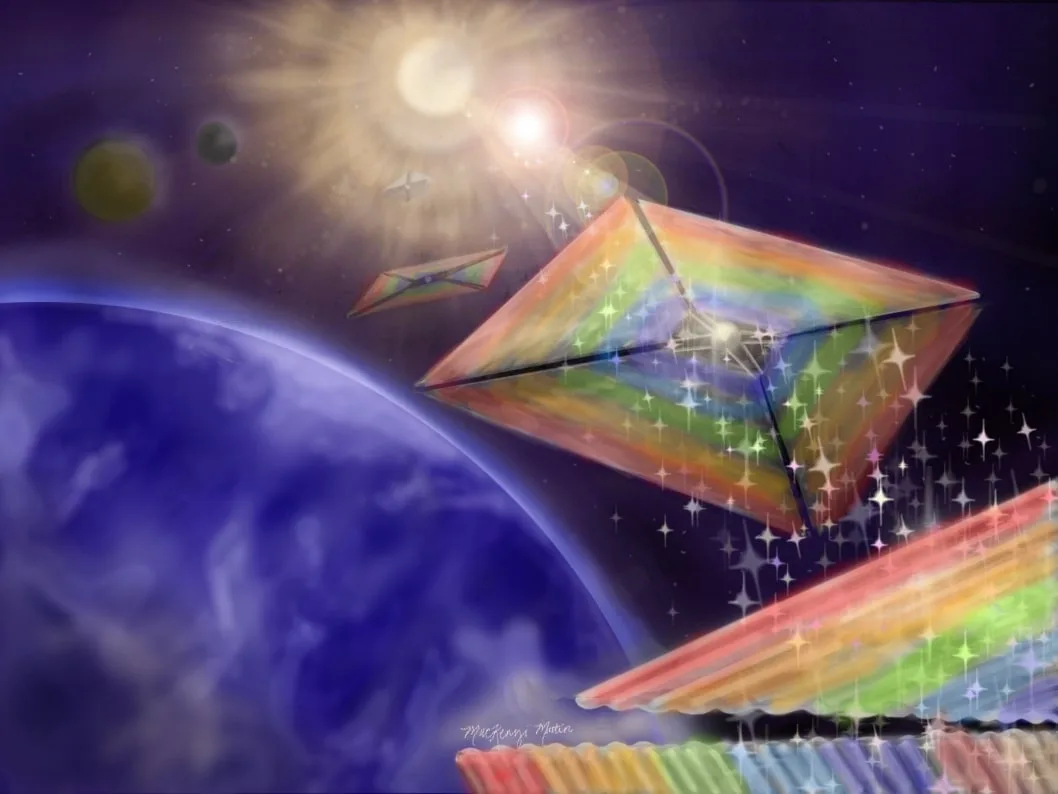
Diffractive solar sails, depicted in this conceptual illustration, could enable missions to hard-to-reach places, like orbits over the Sun’s poles. NASA
How light itself becomes the problem
The paper breaks lightsail propulsion into three photon-driven forces, namely incident light, specular reflection, and diffuse scattering. Incident light is the direct push from incoming photons. Specular reflection comes from photons bouncing cleanly off the sail. Diffuse scattering happens when light is absorbed and reemitted in less orderly directions. At lower speeds, all three can help propel the sail.
However, the issue comes when a lightsails spacecraft hits relativistic speeds. As the sail moves away from the laser, Doppler effects reduce the frequency of the incoming light. So the thrust from all three components starts to fall off as the sail gets faster. The weird part is what happens when approaching 75% of the speed of light. At this point, the study suggests diffuse scattering can shift from being a weak helper to an active drag force. The net force from the laser still pushes the spacecraft forward, but there is an efficiency drop.
Why lightsail dream still isn’t dead
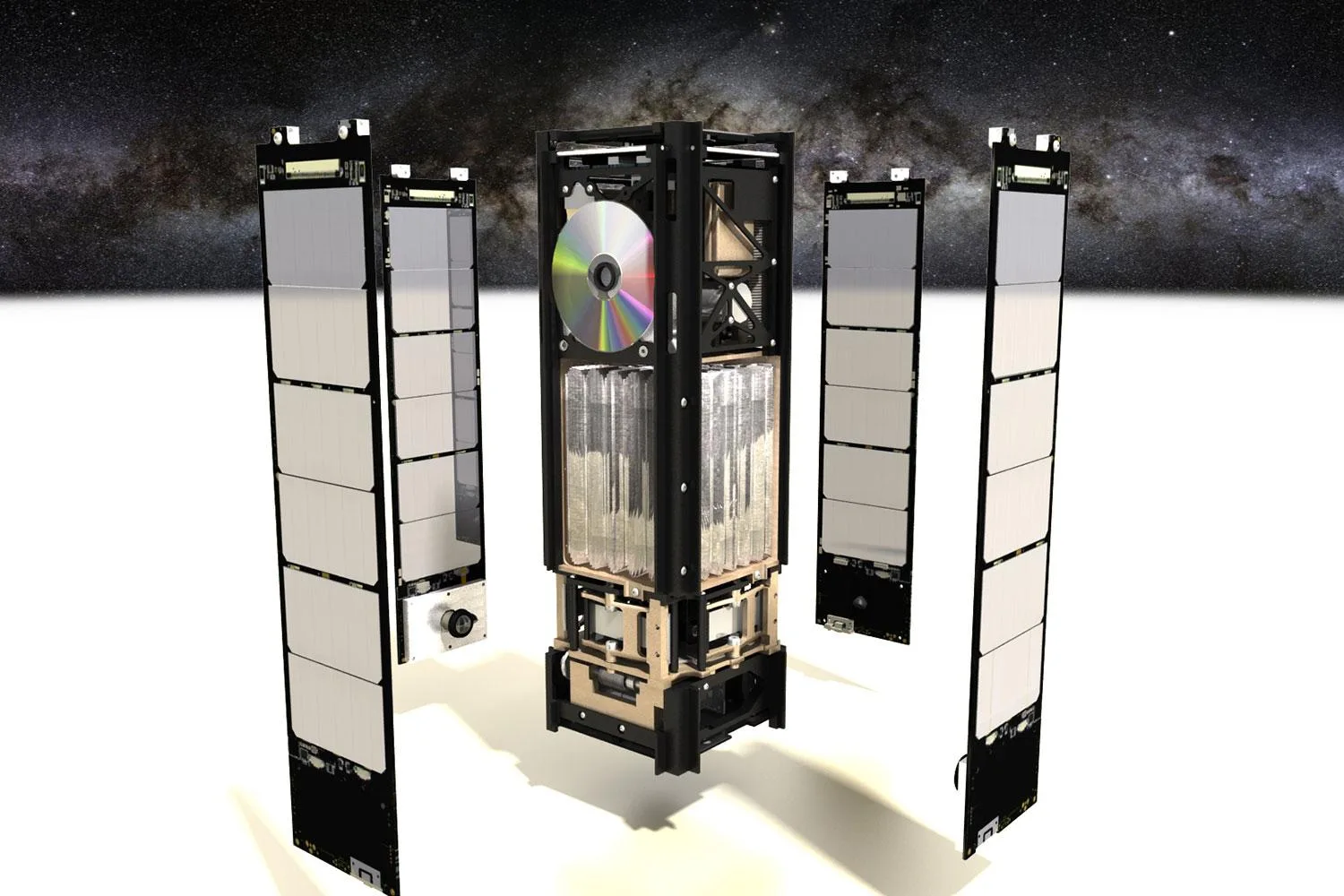
LightSail component breakaway Josh Spradling / The Planetary Society
This doesn’t mean that we have to drop the lightsail concept. The study is theoretical, published as a preprint, and focuses on radiative dynamics. It does not model every other nightmare engineers would have to solve, including interstellar dust, gas drag, beam stability, or whether a sail could survive a powerful laser without deforming or melting.
Interstellar lightsails are already a stack of engineering problems. Understanding how light behaves at extreme speeds gives mission designers another constraint to plan around. Advanced materials and photonic structures may still help. But for now, our interstellar spacefaring era still has plenty of aspects that need polishing.
Hinweis: Externer Inhalt von https://www.digitaltrends.com/space/lightsails-have-hit-another-speed-bump-on-the-road-to-interstellar-travel/. Rechte bei den jeweiligen Urhebern. » Mehr… » Melden