


Instead of heading directly to Venice, explore Friuli-Venezia Giulia, Italy’s lesser-visited eastern region, easily accessible from Venice Marco Polo Airport. This culinary and wine gem offers a unique blend of Italian, Slavic, and Central European cultures. Discover quiet towns like Sacile and San Daniele del Friuli, renowned for artisan traditions such as knife-making, mosaics, and exceptional prosciutto. The region boasts diverse winemaking, from dry Friulano to unique orange wines in Oslavia and sweet Ramandolo. Experience Udine’s Habsburg charm and aperitivo culture, or Trieste’s bustling port, rich café life, and literary history. Friuli provides authentic hospitality, diverse landscapes, and an unhurried charm, making it a captivating alternative.
When you land at Venice Marco Polo Airport, you instinctively want to hop on a water taxi and disappear into the magic of Venice. But what if you go east instead? I suggest you postpone your gondola ride, rent a car, and cross into Friuli-Venezia Giulia, a lesser-visited region full of culinary gems.
There are no anchor cities here, like Florence in Tuscany or Bologna in Emilia-Romagna. Instead, you’ll find quiet river towns, stretches of forest, hilly vineyards, and artisan families who have been making things for generations: knives, cheese, honey, prosciutto. Some stops on this Friuli itinerary feel like the edge of the known world. Others, like Trieste or Udine, are bustling cities where empires once clashed and cultures have been intertwining and negotiating for centuries.
“What excited me about Friuli [wine] was that everyone had a completely different take,” says Bobby Stuckey, Master Sommelier and co-founder of Frasca Food and Wine in Boulder, Colorado, who has been taking trips to the region for 30 years. “In Napa, you might find everyone working with the same consultant. In Friuli, everyone was doing something different, and they were all friends. That spirit never left.”
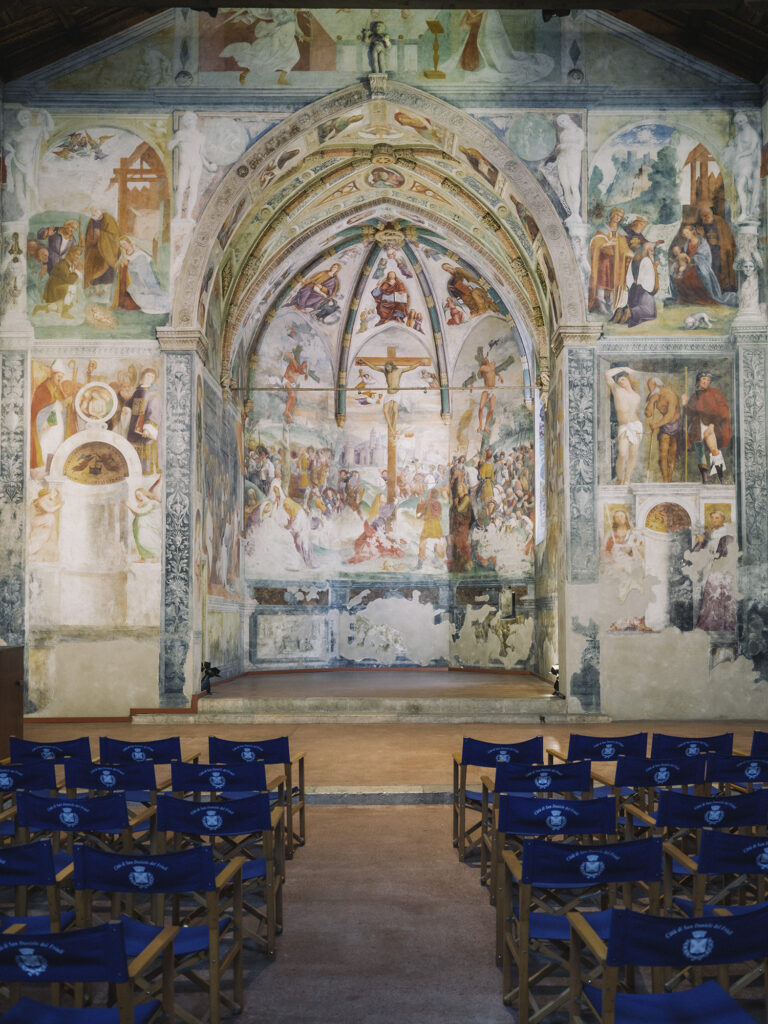
The Church of Sant’Antonio Abate in San Daniele. Photo by Federico Ciamei
Sacile and San Daniele del Friuli
Your first stop, just inside Friuli’s western edge, is the town of Sacile. Walk along the river and order your first glass of Friulano, a dry white wine with citrus peel and almond notes. Nothing feels urgent, and that is the point.
To best understand Friuli, “Start with the people who make things,” says Elena Orzan, a local cultural ambassador. Head north to Maniago, where a knife- and blade-making tradition has continued for centuries and remains very much alive. Drive farther and discover the mosaics of Spilimbergo, assembled piece by piece over the centuries.
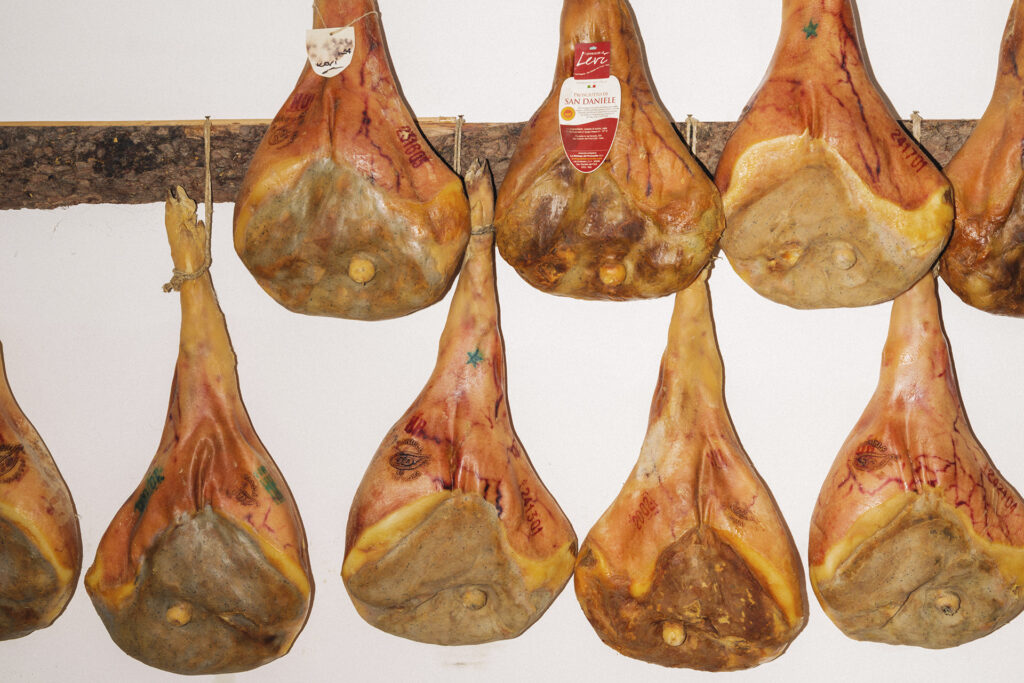 La Bottega del Prosciutto di Levi in San Daniele. Photo by Federico Ciamei
The road climbs toward San Daniele del Friuli, where La Bottega del Prosciutto di Levi, open since 1890, sells salumi, smoked ricotta from the Carnic Alps, local cheeses, and wines. Order prosciutto of different ages alongside a glass of Friulano from the tap and let the afternoon slow to a stop.
Before you leave, step into the Biblioteca Guarneriana, founded in 1466; its shelves hold 12,000 antique books and 600 manuscript codices, including a 14th-century handwritten copy of The Divine Comedy. Nearby, the Church of Sant’Antonio Abate is adorned with frescoes so stunning that it is known as the Sistine Chapel of Friuli.
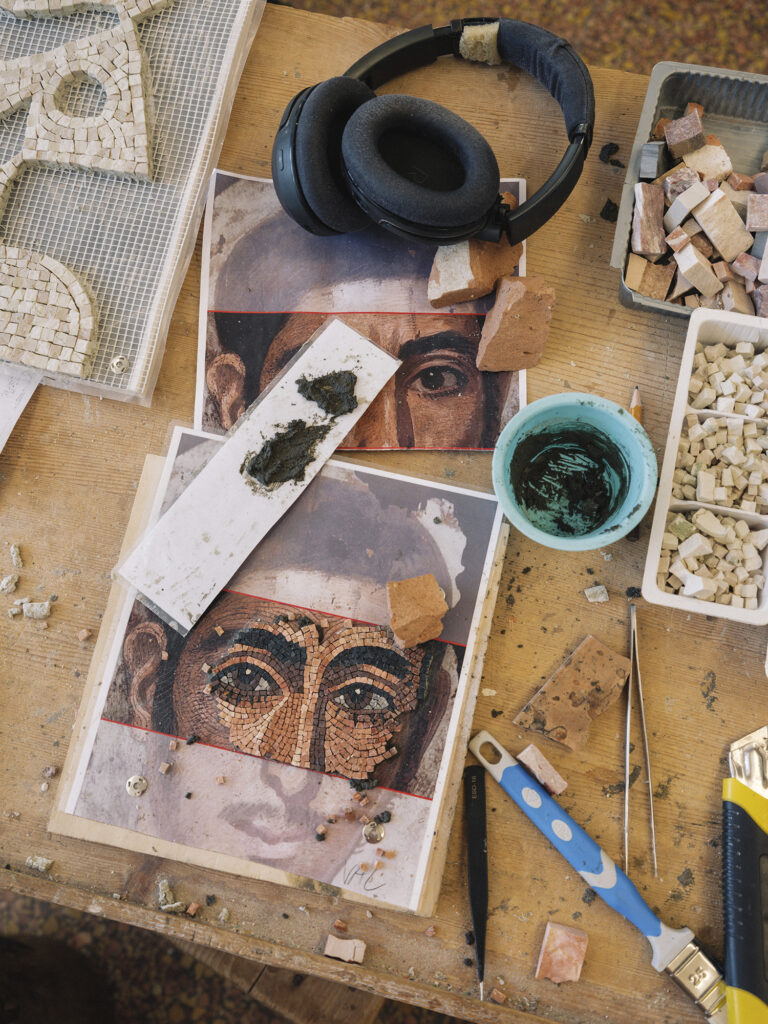 DIY mosaics at Scuola Mosaicisti del Friuli. Photo by Federico Ciamei
WINE: Friulano Grave DOC, Pinot Grigio Ramato, Cividin
FOOD: Prosciutto di San Daniele, frico, ricotta affumicata
NOT TO MISS: Biblioteca Guarneriana, Church of Sant’Antonio Abate, Scuola Mosaicisti del Friuli
// Create the element
var script_6a4bba3757caa = document.createElement(„script“);
script_6a4bba3757caa.innerHTML = `
window.googletag = window.googletag || {cmd: []};
googletag.cmd.push(function() {
var adType = „leaderboard“;
var mapping;
var lbmapping = googletag.sizeMapping()
.addSize([1024, 0], [[970, 250], [970, 90], [1, 1], [728, 90]])
.addSize([728, 0], [[728, 90], [1, 1]])
.addSize([320, 0], [[1, 1], [300, 50], [300, 100], [320, 50], [320, 100]])
.addSize([0, 0], [[1, 1], [320, 50]])
.build();; // Size mapping for leaderboard ads
var medrecmapping = googletag.sizeMapping()
.addSize([1024, 0], [[300, 600],[300, 250]])
.addSize([728, 0], [300, 250])
.addSize([320, 0], [[1, 1],[300, 250]])
.addSize([0, 0], [[1, 1], [300, 250]])
.build(); // Size mapping for med rectengle ads
if(‚/39808611/article_page/article_leaderboard_1‘ == ‚/39808611/article_page/article_leaderboard_1‘
|| ‚/39808611/article_page/article_leaderboard_1‘ == ‚/39808611/article_page/article_leaderboard_2‘
|| ‚/39808611/article_page/article_leaderboard_1‘ == ‚/39808611/article_page/article_leaderboard_3‘) {
mapping = googletag.sizeMapping()
.addSize([1920, 0], [[728, 90]]) // >= 1920px
.addSize([1440, 0], [[728, 90]]) // 1440px-1919px
.addSize([730, 0], [[300, 250]]) // 730px-1439px
.addSize([0, 0], [[320, 100], [320, 50], [300, 100], [300, 50], [300, 250]]) // Up to 729px
.build();
} else {
mapping = adType == ‚leaderboard‘ ? lbmapping : medrecmapping;
}
googletag.defineSlot(‚/39808611/article_page/article_leaderboard_1‘, [[1, 1]],
‚div-gpt-ad-6a4bba3757caa‘).addService(googletag.pubads()).defineSizeMapping(mapping);
googletag.pubads().enableSingleRequest();
googletag.pubads().collapseEmptyDivs();
googletag.display(‚div-gpt-ad-6a4bba3757caa‘);
});
`;
// Append the script to the body
document.body.appendChild(script_6a4bba3757caa);
Tarcento, Savorgnano del Torre, and Nimis
Head into the foothills, where the land lifts and folds, vines appear in pockets framed by forest, and the mountains loom just beyond. In Tarcento, younger growers are returning to old vineyard sites and working with the Refosco dal Peduncolo Rosso grape with newfound precision. A short drive brings you to the village of Savorgnano del Torre, where the wines lean on Friulano and Picolit, which is more famous as a sweet variety, but here it’s dry, driven, fresh, and electric.
Continue higher to Nimis, home to the sweet wine Ramandolo, one of Friuli’s quiet revelations that’s defined by its structure, tension, and a deep connection to the land. Stop at the winery Dario Coos for a tasting that reframes everything you thought you knew about the variety.
“Friuli’s strength is that no one is trying to make the same wine,” says Lachlan Mackinnon-Patterson, co-founder of Frasca Food and Wine and Benvenusa Imports. “That independence is what keeps it alive.”
WINE: Ramandolo DOCG (Verduzzo), Savorgnano del Torre Bianco, Refosco dal Peduncolo Rosso
FOOD: pitina, Prosciutto di Sauris, strucolo de pomi
NOT TO MISS: Castello di Tarcento, Valli del Torre, Castello di Coia
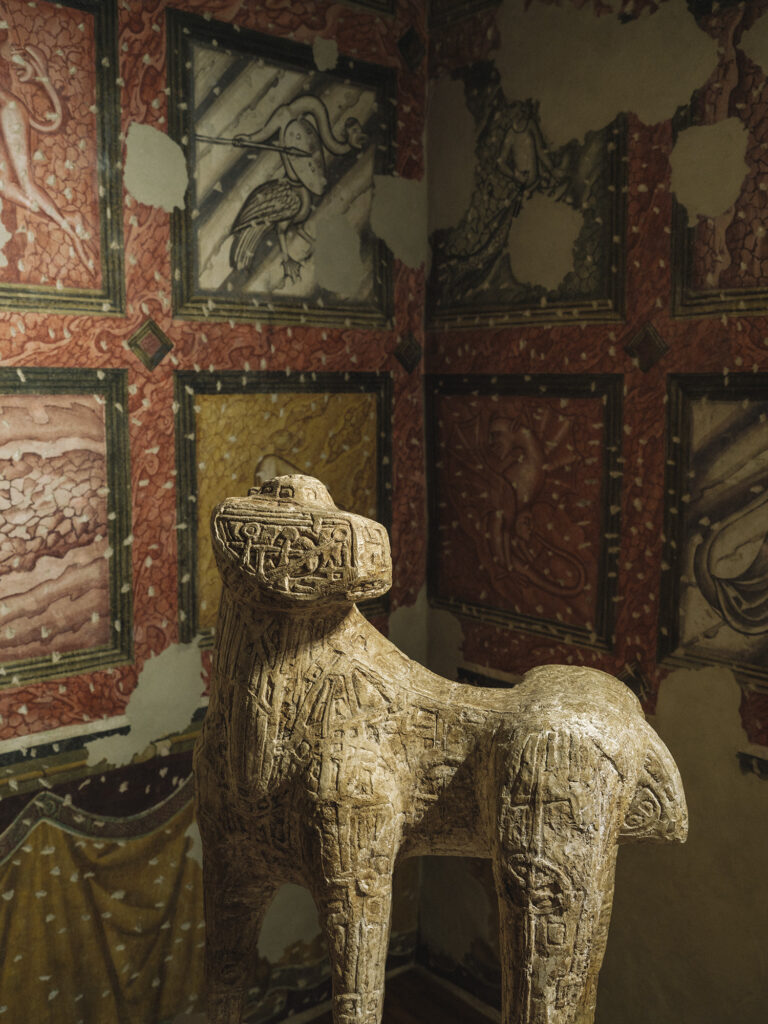 Casa Cavazzini museum in Udine. Photo by Federico Ciamei
Udine
In Udine’s architecture, you see Venice in the façades, but sense something else in the buildings themselves—Habsburg order and spacing, a rhythm that’s distinctly Central European. Walk up to the castle for a view that reveals the whole region: the plains stretching west, the hills rising to the east, the mountains cutting the northern horizon.
Come down into the Palazzo Arcivescovile, where Tiepolo painted some of his most luminous early frescoes. Then find a table. The real magic of Udine happens at street level, in the aperitivo hour that begins around 5 p.m. and keeps no fixed schedule. A glass of Friulano, a crostino, a conversation already in progress. This is not performance; this is how the city works.
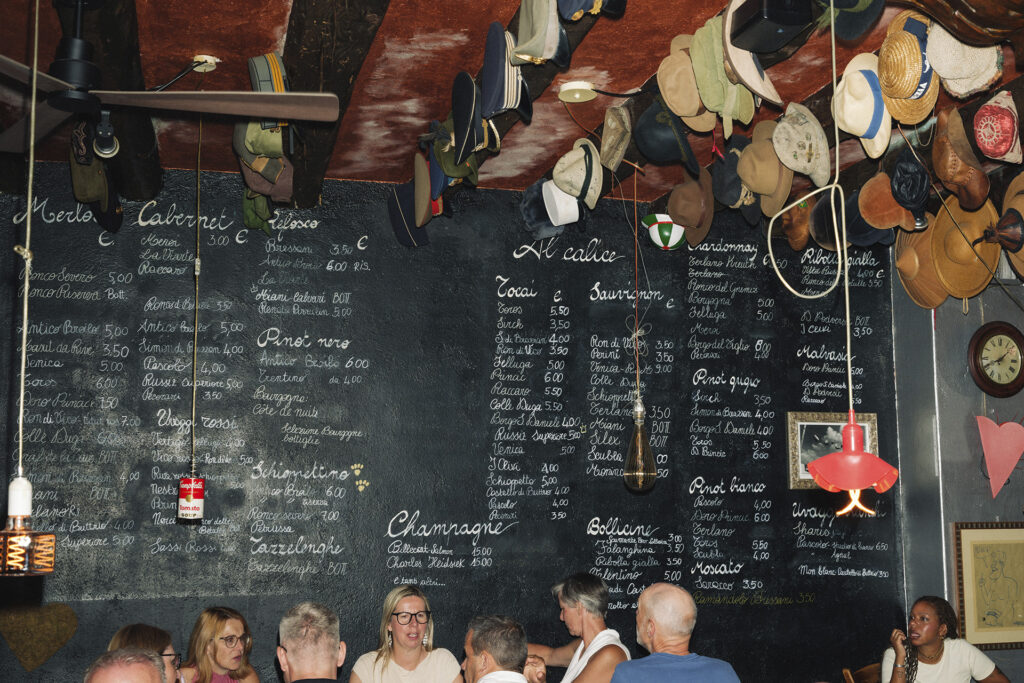 The ceiling at Osteria al Cappello makes more sense if you know that cappello means hat. Photo by Federico Ciamei
On Saturdays, the spot to hit is Osteria al Cappello. Stuckey says it’s essential, the kind of restaurant where you immediately feel part of city life, rather than watching it from the outside.
WINE: Pinot Bianco, Malvasia Istriana, Tazzelenghe
FOOD: frico, crostini con lardo, musetto con brovada
NOT TO MISS: Casa Cavazzini modern and contemporary art museum, Castello di Udine, Piazza Libertà
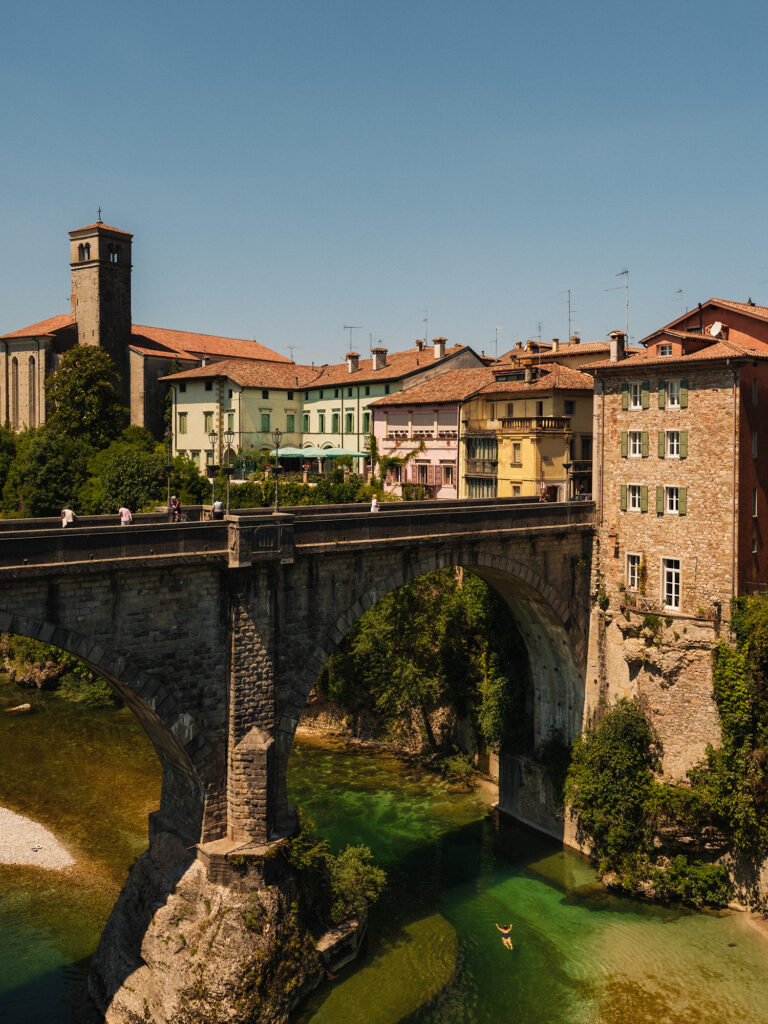 The Ponte del Diavolo bridge in Cividale del Friuli. Photo by Federico Ciamei
Cividale del Friuli
Cividale was founded as Forum Julii, possibly by Julius Caesar, around 50 B.C.E., and later became the first capital of the Lombard duchy, giving the entire region its name. The Ponte del Diavolo bridge spans the gorge with drama that stops you in your tracks. The Tempietto Longobardo, an eighth-century chapel tucked into the riverbank, features carved figures that have survived intact for 13 centuries. Cividale is not a footnote; it is where the story of Friuli begins.
Find a table for cjarsons, the local stuffed pasta filled with herbs, ricotta, and sometimes a touch of chocolate or cinnamon. It’s a recipe that’s been carried across the centuries and made differently in every kitchen.
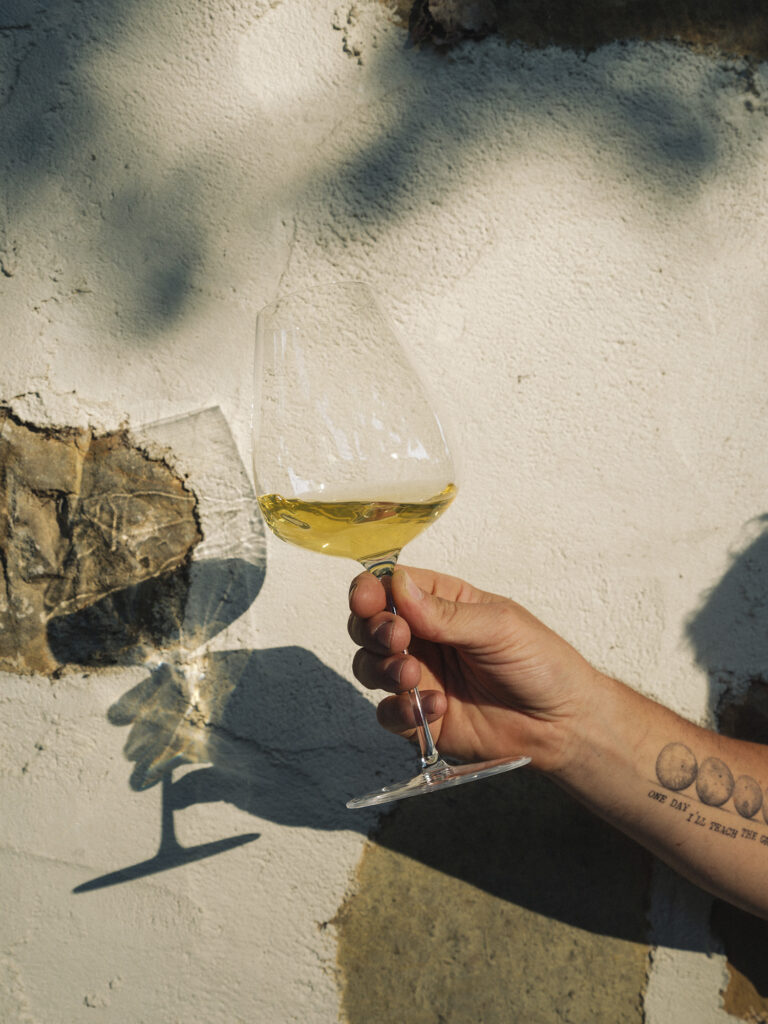 Mitja Sirk Bianco is a blend of Friulano, Malvasia, and other native white grapes. Photo by Federico Ciamei
WINE: Schioppettino di Prepotto, Rosazzo Bianco, Pignolo
FOOD: cjarsons, gubana, trota del Natisone
NOT TO MISS: Piazza Paolo Diacono, Duomo di Santa Maria Assunta, Rosazzo Abbey
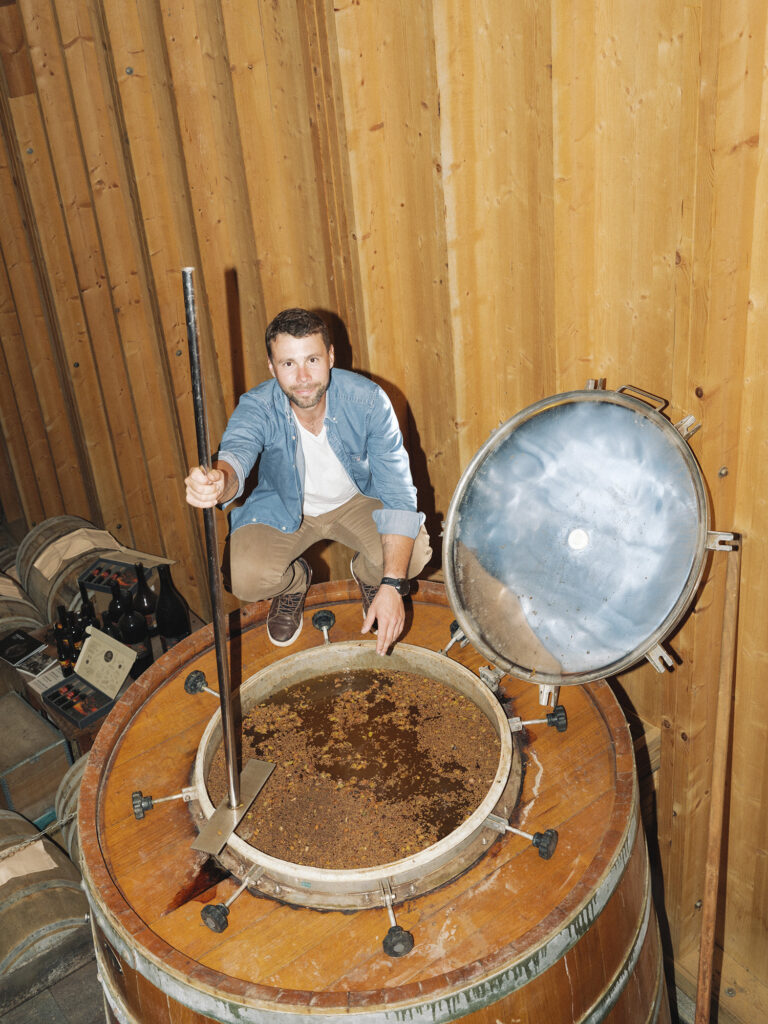 A decade ago, Mitja Sirk revived winemaking at his family’s La Subida estate in Cormòns. Photo by Federico Ciamei
Cormòns, Collio, and Oslavia
Head south toward Cormòns and into Collio, where you’ll be greeted by vines in every direction and soft light. As you move through the landscape, the place names shift and the language on the signs softens. Without realizing it, you have crossed into Brda, Slovenia. Producers like Edi Keber work on both sides of the border, not as a statement, but because it has always been this way.
“The diversity within such a small stamp of land is hard to describe,” says Giampaolo Venica of the winery Venica and Venica, which is known for its single-vineyard Sauvignon Blanc. Friulian Sauvignon Blanc sits between the minerality and herbal notes of great Sancerre and the punchy fruit of New Zealand Sauvignon Blanc—a mix of crushed stone, fresh herbs, and white grapefruit with an acidity that defines what “racy” means in wine.
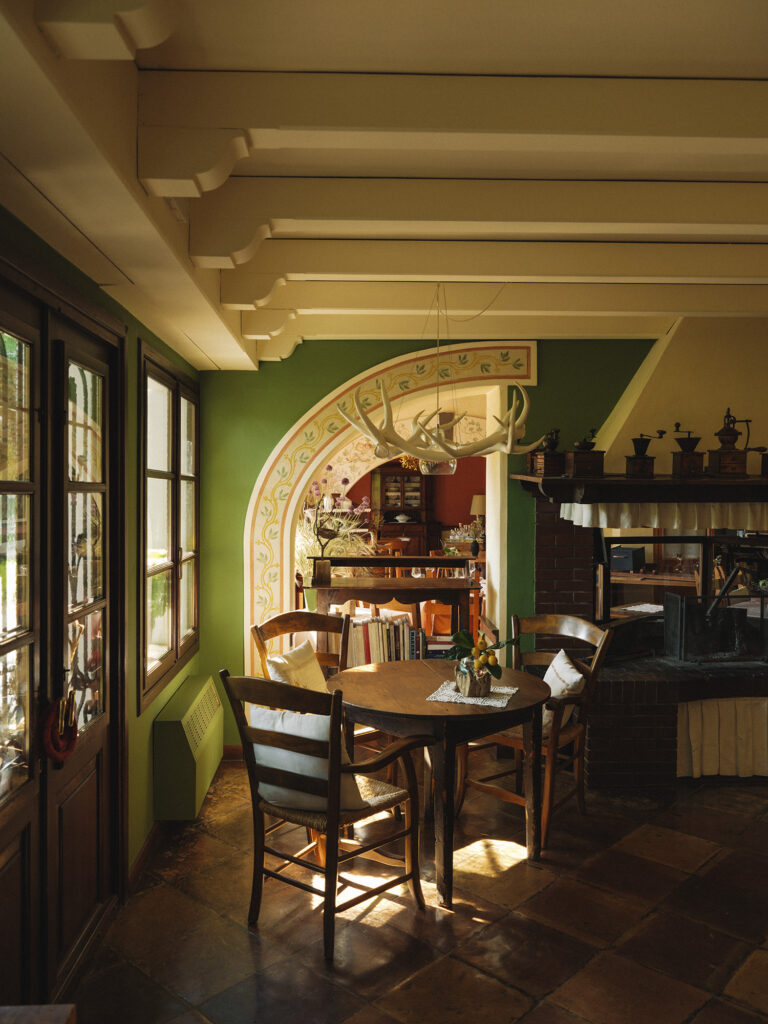 The La Subida resort is a pioneer of ecofriendly, rusticluxury hospitality in the region. Photo by Federico Ciamei
Stay at La Subida, an eco-friendly resort run by the Sirk family. Polenta arrives from a copper pot, churned for hours and cut by a string as tradition demands. Visits turn into conversations, conversations turn into corks being pulled, and lifelong friendships are made. “They don’t have the pressure of tourism,” says Bobby Stuckey of the region. “They are genuinely excited that you are there.”
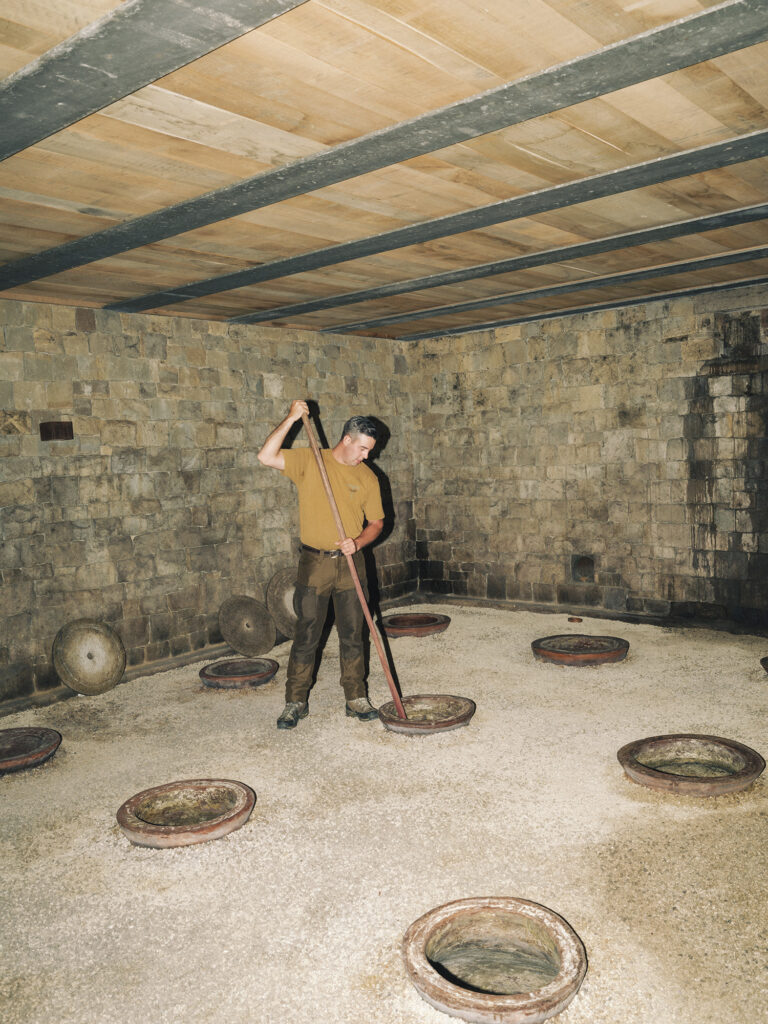 Gregor Pietro, whose grandfather Joško Gravner is a legend of skin-contact winemaking in Oslavia. Photo by Federico Ciamei
Then find your way to Oslavia, 200 meters from the Slovenian border, where a war memorial above the vines holds the remains of more than 57,000 soldiers who fell here in World War I. What grew back was wine. The village has seven producers, including Gravner, Radikon, Fiegl, and Dario Prinčič. In the late 1990s, Gravner and Radikon returned to ancient techniques, skin maceration, and amphoras buried in the earth. What the world called orange wine was, in Oslavia, simply a return to their legacy.
WINE: Collio Bianco, Ribolla Gialla macerata, Collio Rosso
FOOD: polenta tagliata, D’Osvaldo prosciutto, frtalja
NOT TO MISS: Sacrario Militare di Oslavia, La Subida, Route of the Orange Benches
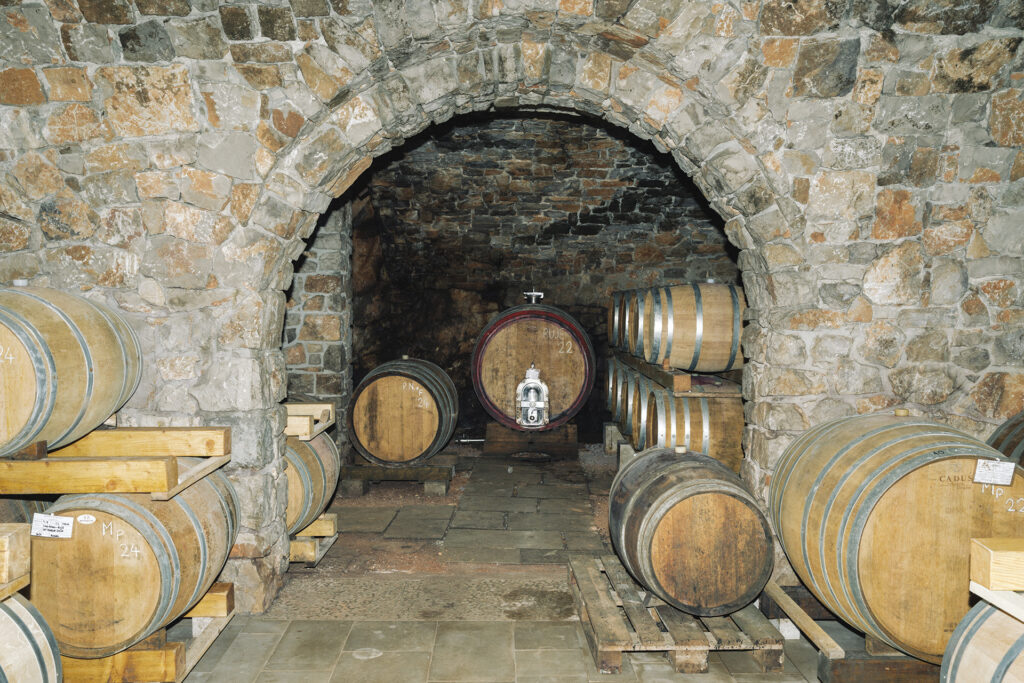 The cellar at Zidarich winery in the Carso. Photo by Federico Ciamei
Gorizia and Carso
Gorizia tells its story without raising its voice. For decades, it was two cities: Gorizia in Italy and Nova Gorica in what was then Yugoslavia (now Slovenia), with a wall dividing them during the Cold War. Today, you can walk across Piazza della Transalpina, a shared square that straddles the border.
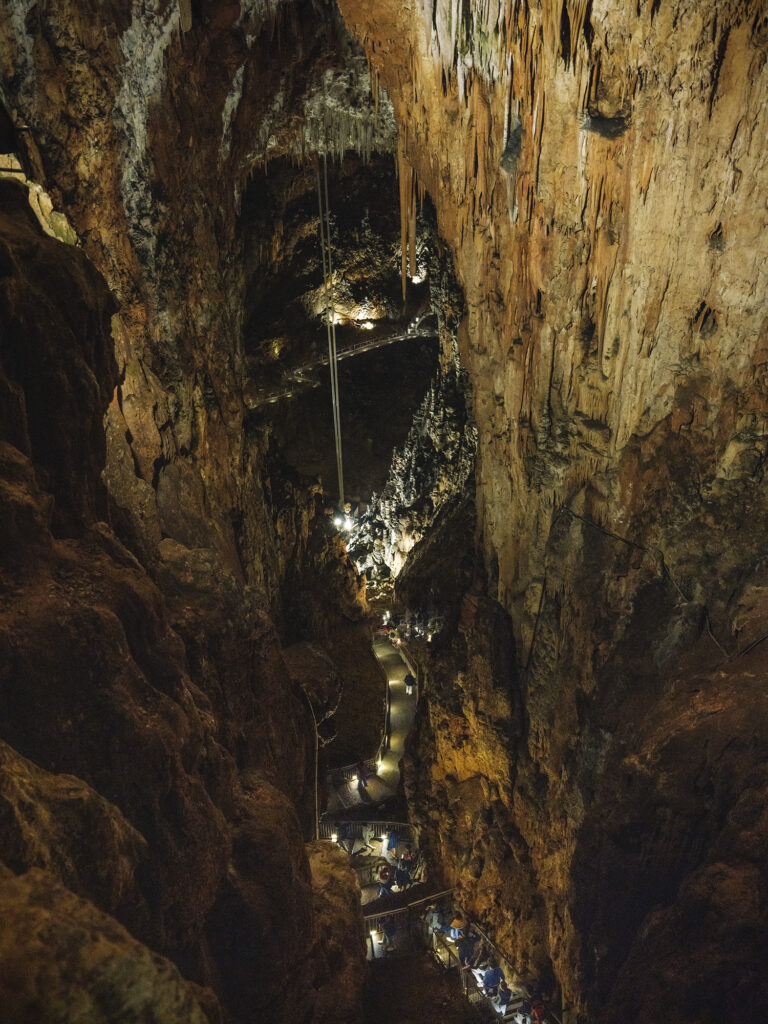 The Grotta Gigante on the Karst Plateau is one of the largest touristaccessible caves in the world Photo by Federico Ciamei
Continue south into Carso, or Kras, where limestone dominates the thin soil and rock must be broken to give the vines a chance. What comes back are wines of clarity and tension: white Vitovska and red Terrano. Find an osmiza, a temporary farm tavern marked by a branch outside when it’s open, like the one at Zidarich winery, and sit down at a long table for wine, salumi, and cheese. “The real magic of Friuli isn’t found in its landmarks,” says Isabella Lupi of Amandum winery. “It’s in people’s homes, around the table.”
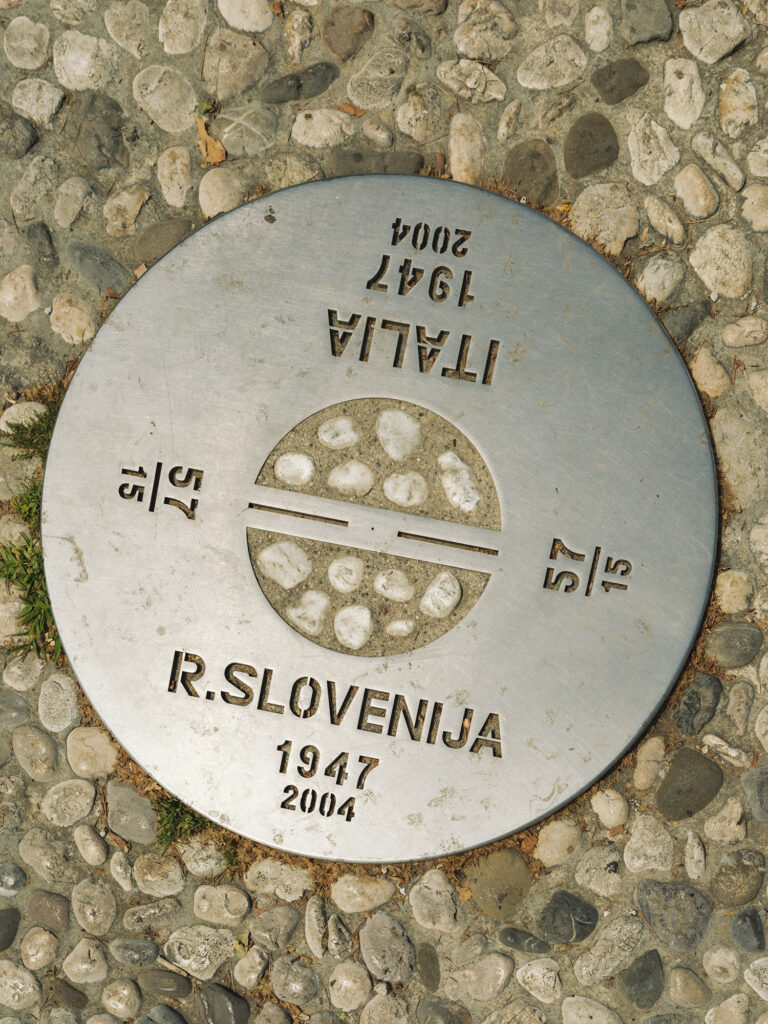 Gorizia’s Piazza della Transalpina straddles the Italy-Slovenia border. Photo by Federico Ciamei
WINE: Vitovska, Terrano del Carso
FOOD: jota (or iota), goulash alla goriziana, Kraški pršut

NOT TO MISS: Piazza della Transalpina, Castello di Gorizia, Grotta Gigante
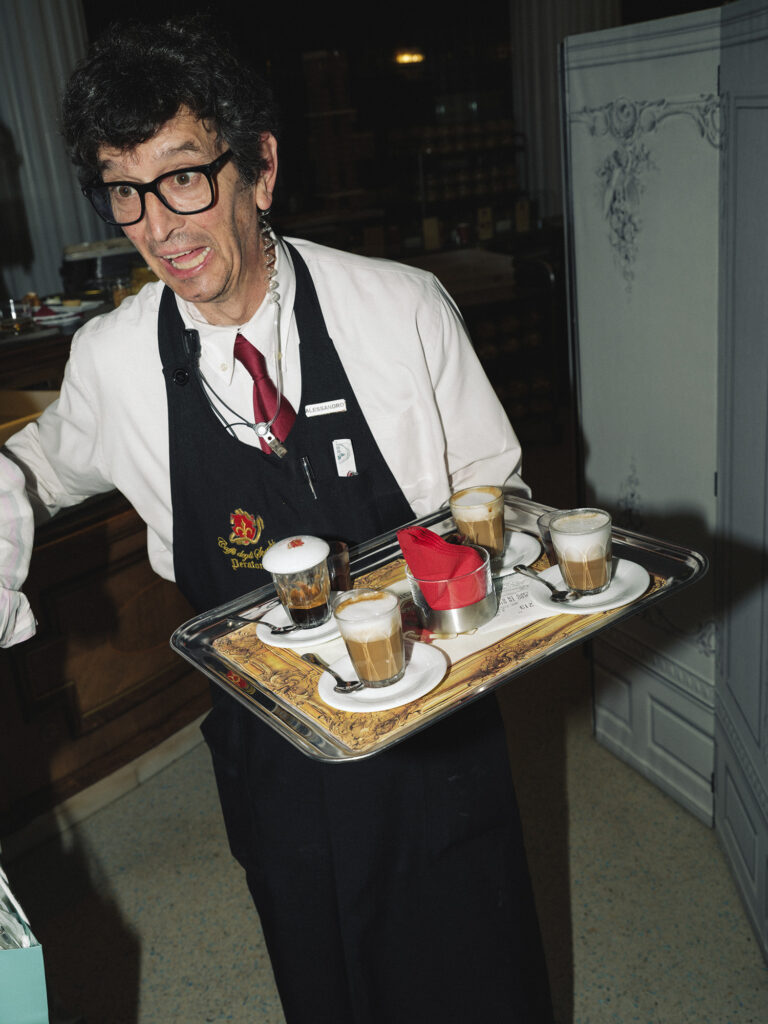 Caffè degli Specchi was founded in 1839 and is considered “Trieste’s front parlor.” Photo by Federico Ciamei
Trieste
Finally, you arrive in Trieste, and everything converges. It was once the Habsburg Empire’s great Adriatic port, a crossroads where merchants, sailors, writers, and refugees coexisted. The café culture they cultivated remains vibrant, from Caffè degli Specchi and Caffè San Marco to the old Viennese-style coffeehouses that line the main avenue, each with its own regulars and rituals. In Trieste, a café is not a stop on the way to somewhere else; it is the destination.
The novelist Italo Svevo, born and buried here, gave the city its literary soul. Its identity has never quite settled, with history always pressing in and beauty and melancholy appearing as the same thing seen from different angles. James Joyce felt it, too, living here for many years. Two of the 20th century’s great literary minds independently chose to live in the same small city on the edge of a crumbling empire, so something special was clearly happening there. Stand in Piazza Unità d’Italia, which opens onto the Adriatic, and you’ll understand it.
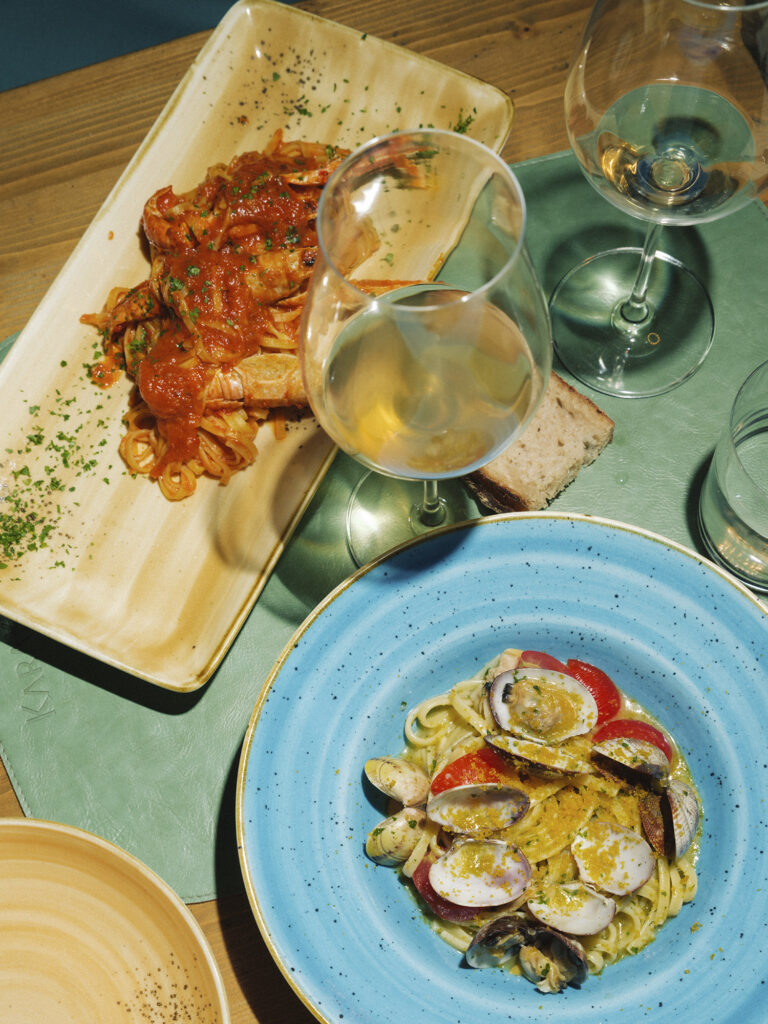 Linguine alle vongole at Karaktér in Trieste. Photo by Federico Ciamei
The food scene is as layered as the history; don’t miss the storied buffets where pork cuts have been carved and served by weight for over a century. Go to Karaktér for seafood and natural wine and to Pagna Panificio Artigianale for sourdough and a bottle list that spans the Old and New Worlds.
Walking through Trieste, you begin to recognize everything you have experienced in the region: Slovenian influence, Italian pace, the weight of history, the openness of the sea. This is the sum of Friuli-Venezia Giulia. When people leave, they ask the same question: Why don’t I live here? Friuli doesn’t offer a good answer. It just waits for you to return.
// Create the element
var script_6a4bba3758b7d = document.createElement(„script“);
script_6a4bba3758b7d.innerHTML = `
window.googletag = window.googletag || {cmd: []};
googletag.cmd.push(function() {
var adType = „leaderboard“;
var mapping;
var lbmapping = googletag.sizeMapping()
.addSize([1024, 0], [[970, 250], [970, 90], [1, 1], [728, 90]])
.addSize([728, 0], [[728, 90], [1, 1]])
.addSize([320, 0], [[1, 1], [300, 50], [300, 100], [320, 50], [320, 100]])
.addSize([0, 0], [[1, 1], [320, 50]])
.build();; // Size mapping for leaderboard ads
var medrecmapping = googletag.sizeMapping()
.addSize([1024, 0], [[300, 600],[300, 250]])
.addSize([728, 0], [300, 250])
.addSize([320, 0], [[1, 1],[300, 250]])
.addSize([0, 0], [[1, 1], [300, 250]])
.build(); // Size mapping for med rectengle ads
if(‚/39808611/article_page/article_leaderboard_2‘ == ‚/39808611/article_page/article_leaderboard_1‘
|| ‚/39808611/article_page/article_leaderboard_2‘ == ‚/39808611/article_page/article_leaderboard_2‘
|| ‚/39808611/article_page/article_leaderboard_2‘ == ‚/39808611/article_page/article_leaderboard_3‘) {
mapping = googletag.sizeMapping()
.addSize([1920, 0], [[728, 90]]) // >= 1920px
.addSize([1440, 0], [[728, 90]]) // 1440px-1919px
.addSize([730, 0], [[300, 250]]) // 730px-1439px
.addSize([0, 0], [[320, 100], [320, 50], [300, 100], [300, 50], [300, 250]]) // Up to 729px
.build();
} else {
mapping = adType == ‚leaderboard‘ ? lbmapping : medrecmapping;
}
googletag.defineSlot(‚/39808611/article_page/article_leaderboard_2‘, [[1, 1]],
‚div-gpt-ad-6a4bba3758b7d‘).addService(googletag.pubads()).defineSizeMapping(mapping);
googletag.pubads().enableSingleRequest();
googletag.pubads().collapseEmptyDivs();
googletag.display(‚div-gpt-ad-6a4bba3758b7d‘);
});
`;
// Append the script to the body
document.body.appendChild(script_6a4bba3758b7d);
WINE: Malvasia del Carso, Terrano Rosato, Carso Bianco
FOOD: bollito di maiale con kren, sardoni in savor, putizza
NOT TO MISS: Miramare Castle, Piazza Unità d’Italia, Museo Revoltella
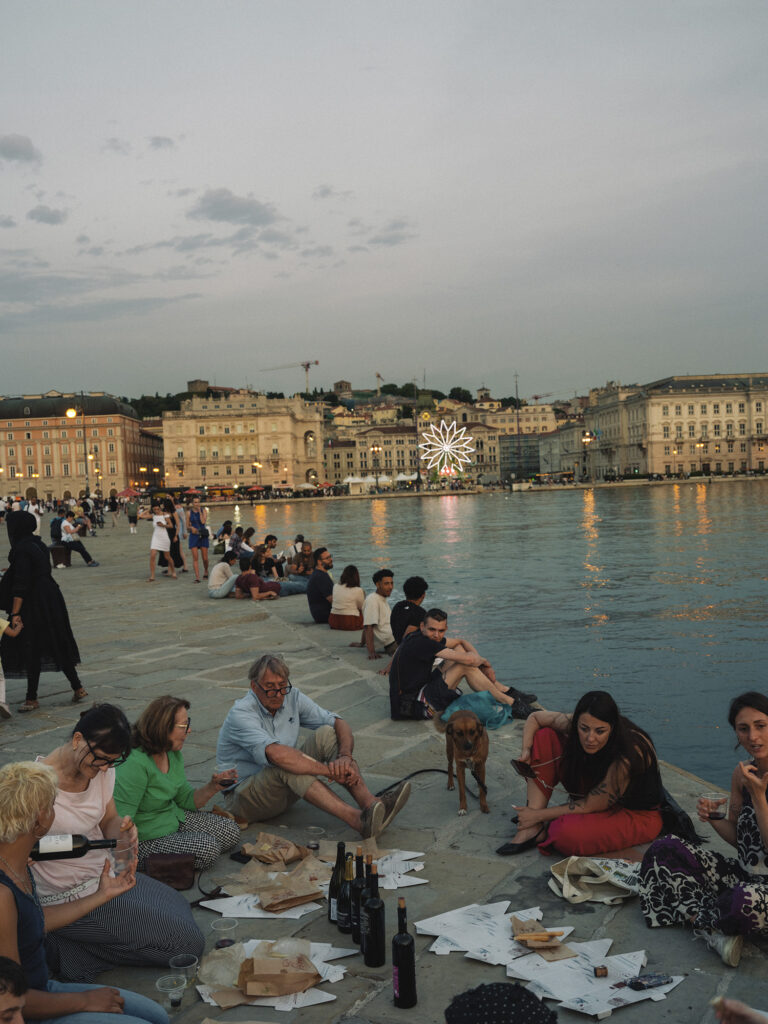 A casual wine tasting on the Trieste waterfront. Photo by Federico Ciamei
This article originally appeared in the August/September 2026 Italy Issue of Wine Enthusiast magazine. Click here to subscribe today!
More Italy Coverage
- Ciuppin, a traditional Ligurian stew, will transport you straight to the Italian coast.
- In Umbria, farmers are reviving vinosanto da uva affumicata, a smoked dessert wine on the brink of extinction.
- From fresh and floral to deep and concentrated, give Gavi a shot.
- In Tuscany’s “Wild West,” young Maremmani winemakers are turning challenges into opportunities.
- Small but mighty, Italy’s Valle d’Aosta is the perfect alpine wine destination.
Exclusive Access to
Wine Country,
Led by Wine Enthusiast
The post Italy’s Best-Kept Wine Travel Secret Is a Quick Jaunt from Venice appeared first on Wine Enthusiast.
Hinweis: Externer Inhalt von https://www.wineenthusiast.com/culture/travel/friuli-venezia-giulia-guide/. Rechte bei den jeweiligen Urhebern. » Mehr… » Melden