



Willkommen bei LifeStyler Baden-Württemberg!
  • Home
  • Werben Sie bei uns
  • AGB
  • Datenschutzerklärung
  • Impressum
LifeStyler Baden-Württemberg
Advertisement
  • Lifestyle
    • Lifestyle
      • Food, Drinks & Genuss
      • Rezepte
      • Restaurants & Cafés BW
      • Bars & Drinks
      • Wein & Regionen
      • Food Trends
      • Fine Dining
    • Fashion & Style
      • Trends & Inspiration
      • Streetstyle
      • Designer & Brands
      • Outfits & Looks
      • Fashion News
      • Sustainable Fashion
    • Living, Interior & Design
      • Interior Trends
      • Architektur
      • Home Ideas & DIY
      • Modern Living
      • Smart Home
      • Design Inspiration
  • Beauty
    • Beauty & Pflege
    • Skincare
    • Make-up
    • Hair & Styling
    • Fragrance
    • Aesthetics & Treatments
    • Men’s Grooming
  • Tech
    • Gadgets & Devices
    • Wearables
    • Apps & Tools
    • Smart Living
    • Digital Trends
    • Technik & Motor
  • Reisen
    • Baden Württemberg
    • Deutschland
    • Europa
    • Worldwide
    • Hotels & Stays
    • Trips & Adventures
    • Travel News
  • Entertainment
    • Entertainment
      • Musik
      • Kunst & Ausstellungen
      • Film & Serien
      • Events in BW
      • Celebrities & Society
      • Culture Trends
    • Gaming & Entertainment Tech
  • Leben
    • Leben
      • Gesundheit & Fitness
      • Ernährung
      • Mental Health
      • Sport
      • Fitness & Training
      • Yoga & Mindfulness
      • Health Trends
      • Prävention & Medizin
    • Family Life & Relationships
      • Partnership
      • Dating & Love
      • Family Life
      • Parenting
      • Life Advice
    • Kids
      • Fashion
      • Lifestyle
      • Health
      • Education
      • Events BW
      • Entertainment
      • DIY
      • Travel
    • Teens & Youth
      • Fashion
      • Lifestyle
      • Health
      • Education
      • Career Start
      • Digital Life
      • Events BW
      • Stories
    • Pets
      • Health
      • Care
      • Training
      • Lifestyle
      • Nutrition
      • Adoption
      • Travel
      • Stories
  • Wirtschaft
    • Wirtschaft
      • Business & Wirtschaft
      • BW Economy & Mittelstand
      • Industry & Innovation
      • Startups & Founders
      • Markets & Trends
      • Companies & Portraits
      • Economic Policy
    • Finance, Career & Success
      • Job & Career World
      • Success & Motivation
      • Finance & Money
      • Work Life Balance
      • New Work
      • Education & Skills
  • Gesellschaft
    • People of Baden Württemberg
    • Lifestyle Stories
    • Gesellschaft & Trends
    • Wissen
    • Interviews
    • Inspiration
    • Community
  • Umwelt
    • Green Living
    • Environment & Nature
    • Nachhaltige Produkte
    • Future Energy
    • Mobility
    • Zero Waste
  • eShop
No Result
View All Result
LifeStyler Baden-Württemberg
  • Lifestyle
    • Lifestyle
      • Food, Drinks & Genuss
      • Rezepte
      • Restaurants & Cafés BW
      • Bars & Drinks
      • Wein & Regionen
      • Food Trends
      • Fine Dining
    • Fashion & Style
      • Trends & Inspiration
      • Streetstyle
      • Designer & Brands
      • Outfits & Looks
      • Fashion News
      • Sustainable Fashion
    • Living, Interior & Design
      • Interior Trends
      • Architektur
      • Home Ideas & DIY
      • Modern Living
      • Smart Home
      • Design Inspiration
  • Beauty
    • Beauty & Pflege
    • Skincare
    • Make-up
    • Hair & Styling
    • Fragrance
    • Aesthetics & Treatments
    • Men’s Grooming
  • Tech
    • Gadgets & Devices
    • Wearables
    • Apps & Tools
    • Smart Living
    • Digital Trends
    • Technik & Motor
  • Reisen
    • Baden Württemberg
    • Deutschland
    • Europa
    • Worldwide
    • Hotels & Stays
    • Trips & Adventures
    • Travel News
  • Entertainment
    • Entertainment
      • Musik
      • Kunst & Ausstellungen
      • Film & Serien
      • Events in BW
      • Celebrities & Society
      • Culture Trends
    • Gaming & Entertainment Tech
  • Leben
    • Leben
      • Gesundheit & Fitness
      • Ernährung
      • Mental Health
      • Sport
      • Fitness & Training
      • Yoga & Mindfulness
      • Health Trends
      • Prävention & Medizin
    • Family Life & Relationships
      • Partnership
      • Dating & Love
      • Family Life
      • Parenting
      • Life Advice
    • Kids
      • Fashion
      • Lifestyle
      • Health
      • Education
      • Events BW
      • Entertainment
      • DIY
      • Travel
    • Teens & Youth
      • Fashion
      • Lifestyle
      • Health
      • Education
      • Career Start
      • Digital Life
      • Events BW
      • Stories
    • Pets
      • Health
      • Care
      • Training
      • Lifestyle
      • Nutrition
      • Adoption
      • Travel
      • Stories
  • Wirtschaft
    • Wirtschaft
      • Business & Wirtschaft
      • BW Economy & Mittelstand
      • Industry & Innovation
      • Startups & Founders
      • Markets & Trends
      • Companies & Portraits
      • Economic Policy
    • Finance, Career & Success
      • Job & Career World
      • Success & Motivation
      • Finance & Money
      • Work Life Balance
      • New Work
      • Education & Skills
  • Gesellschaft
    • People of Baden Württemberg
    • Lifestyle Stories
    • Gesellschaft & Trends
    • Wissen
    • Interviews
    • Inspiration
    • Community
  • Umwelt
    • Green Living
    • Environment & Nature
    • Nachhaltige Produkte
    • Future Energy
    • Mobility
    • Zero Waste
  • eShop
LifeStyler Baden-Württemberg
No Result
View All Result
Home Gesundheit, Wellness & Fitness Mental Health

In the Age of AI, What Must Remain Human in Behavioral Health?

Juni 26, 2026
in Mental Health
Lesezeit: 6 mins read
0 0
0

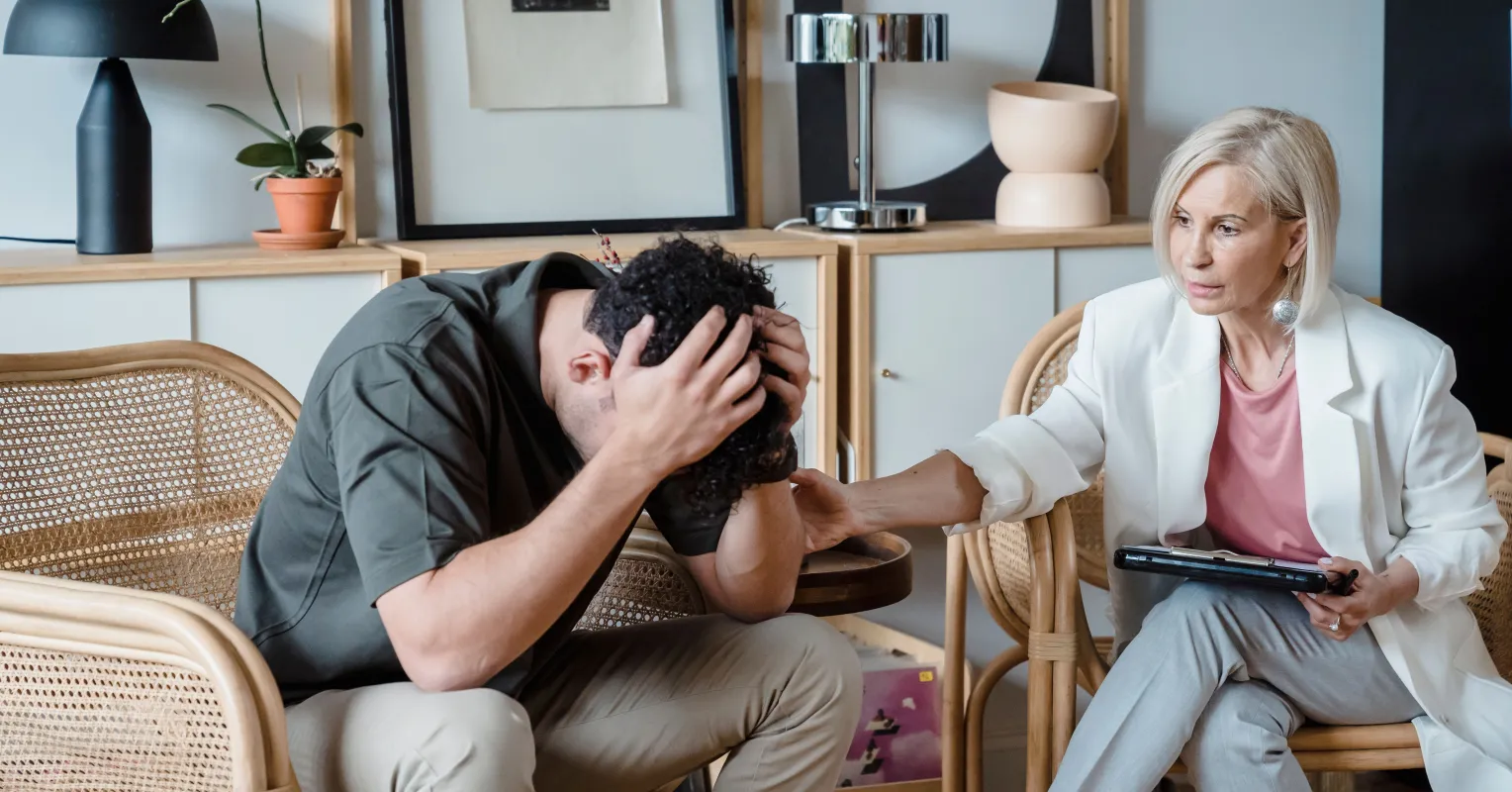
AI is quickly integrating into strained behavioral health, offering efficiency in administrative tasks like organizing notes and supporting triage, thus freeing clinicians for direct care. However, behavioral health is fundamentally a trust-based, human-centric field where the therapeutic encounter itself is care. AI struggles with the nuanced emotional complexities, cultural contexts, and unspoken distress inherent in human interactions; it processes patterns but lacks genuine semantic understanding or empathy. Crucially, AI cannot replace human judgment, accountability, or true connection in sensitive moments like crisis intervention or critical treatment decisions. A practical standard suggests AI for routine, low-risk tasks, while human judgment must remain central for interpretation, trust, and meaningful consequences. AI should support, not diminish, human connection.

Artificial intelligence is moving quickly into behavioral health at a time when the field is already under intense strain. Demand is high, access is uneven, clinicians are stretched, and many are looking for a tool that can help them work faster and reach more people. That makes AI attractive. It can reduce paperwork, support intake, organize information, and help teams respond more efficiently. In a system under pressure, those gains are real.

But behavioral health is not only a workflow problem. It is also a trust problem. That is what makes this moment different. In many parts of healthcare, technology can improve efficiency without changing the meaning of the encounter. Behavioral health works differently. The encounter itself is part of the care. What people say, when they say it, and whether they feel safe enough to continue all matter deeply.

The question, then, is not whether AI should exist in behavioral health. It already does, and it likely will play a larger role over time. The real question is what should remain human no matter how advanced the tools become.

Where AI Can Help

AI has clear value in behavioral health when it is used for routine, repetitive, or administrative work. It can help organize notes, summarize records, support triage, and reduce tasks that pull time away from direct care. In settings where clinicians are buried in documentation, those gains can matter. They can create more space for listening, follow-up, and better coordination.

The American Psychological Association (APA) notes that AI may help streamline administrative tasks, improve workflow efficiency, and support clinical decision-making in mental health care. That is a useful role, especially when the goal is to reduce burden rather than replace judgment. In the best cases, AI can give providers more time to focus on the human side of care instead of the clerical side.

Still, usefulness should not be mistaken for readiness. A tool can be efficient and still be inappropriate in the wrong context. Behavioral health is especially sensitive because the information involved is often incomplete, emotional, and deeply personal. There is no simple formula for understanding what someone means when they are in distress.

Why Behavioral Health Is Different

Behavioral health is full of complexity that does not fit neatly into structured data. People do not always describe distress directly. Some minimize what they are feeling. Some speak in fragments. Some use metaphor. Some hide pain behind humor, anger, or silence. Others do not trust the system enough to say what is really happening the first time they are asked.

Culture also matters. The way distress is expressed can differ across communities, families, and languages. Trauma changes what feels safe to share. Shame changes how people answer questions. Fear changes what they leave out. These are not small details. They shape whether care is accurate, timely, and safe.

That is why AI can process language through mathematical pattern matching without truly understanding semantic meaning. It may identify trends, detect keywords, or sort responses into risk categories. But behavioral health depends on more than pattern recognition. It depends on context, clinical judgment, and the uniquely human ability to read what is intentionally left unsaid.

That limitation matters in every part of the care journey, but especially at the point where decisions carry real consequences. In behavioral health, a missed nuance is not a minor error. It can change the course of care.

What AI Cannot Replace

The most sensitive moments in behavioral health should not be handed over to automation. When someone may be at risk of self-harm, in crisis, or facing a major treatment decision, a machine can assist, but it cannot own the responsibility. Final judgment must stay with people because accountability cannot be outsourced.

This is not a philosophical argument. It is a practical one. A system can suggest risk. It can flag patterns. It can support screening. But the responsibility for understanding the full situation must remain with a human who can weigh context, contradiction, history, and tone. A model cannot carry moral responsibility. A clinician can.

Empathy also has to remain human. A system can be trained to sound warm. It can mirror reassuring language. It can even create the impression of attentiveness. But behavioral health is not only about saying the right words. It is about sensing hesitation, making room for silence, adjusting to what the other person needs in the moment, and building trust over time.

That is why people often react badly when care feels too automated too soon. The problem is not always technical accuracy. Sometimes the answer is correct but still feels cold. Sometimes the message is polished but emotionally empty. In behavioral health, that gap matters. Feeling heard is often the beginning of recovery.

The Risk of Moving Too Fast

There is a real risk in adopting AI simply because it is available, modern, or efficient. Healthcare leaders may feel pressure to use it broadly because it promises scale. But not every use case is appropriate. Some are low risk. Others are too sensitive to leave without human oversight.

The danger is not only bad output. It is the slow habit of letting technology define where human judgment ends. Once that happens, care can become more mechanical without anyone clearly choosing that outcome. That is where leaders need to be careful.

The stronger argument for AI in behavioral health is not that it replaces care. It is that it can create more room for care to happen. If it reduces friction, lightens admin burden, and helps teams prioritize attention, then it may support better care. But if it becomes a barrier between people and the help they need, then the technology is moving in the wrong direction.

That is why the issue is not whether AI can be useful. It is whether it is being used in ways that preserve trust, dignity, and human connection.

A Simple Standard for Use

A practical rule is better than a broad promise. If a task is routine, reversible, and low risk, AI may help. If a task involves trust, interpretation, or meaningful human consequence, it should stay with people.

That standard is not anti-technology. It is responsible technology. It creates a clear line between support and substitution. It helps organizations decide where AI can improve efficiency and where human judgment must remain central.

Behavioral health does not need less innovation. It needs better judgment about where innovation belongs. Leaders should ask not only whether a tool works, but also what it changes in the care experience. Does it help people feel more supported, or more processed? Does it reduce burden without reducing humanity? Does it create more time for connection, or quietly move the human out of the center? Those are the right questions because behavioral health care is not defined by throughput alone. It is defined by relationship.

What Should Remain Human

The future of behavioral health will not be defined by how much we automate. It will be defined by what we refuse to automate away. AI may have an important place in this field, but only if it serves human connection rather than competing with it. The most important parts of care still depend on something no model can truly replace: the ability to sit with another person, understand distress, and respond with genuine care.

That is the standard behavioral health should hold onto as AI becomes more common. Not fear. Not hype. Just clear judgment about what should be supported by technology and what should never be reduced to it.

Inger Sivanthi is the Chief Executive Officer of Droidal, an AI healthcare services company focused on revenue cycle and operational automation. With expertise in large language models and applied AI, he has helped healthcare organizations achieve over $250 million in cost savings through intelligent AI agents. His work focuses on responsible AI adoption that improves healthcare operations and financial outcomes at scale.

References

American Psychological Association. Artificial intelligence in mental health care.

The Commonwealth Fund. Behavioral Health Care in the United States: How It Works and Where It Falls Short.

Opel M, Breakspear M. Transforming mental health research and care through artificial intelligence. Science. 2026.

O’Dell B, Stevens K, Tomlinson A, Singh I, Cipriani A. Building trust in artificial intelligence and new technologies in mental health. Evid Based Ment Health. 2022.

American Psychological Association. Technology is reshaping practice to expand psychology’s reach.

American Psychological Association. APA urges safeguards for using AI in mental health.


Hinweis: Externer Inhalt von https://behavioralhealthnews.org/in-the-age-of-ai-what-must-remain-human-in-behavioral-health/. Rechte bei den jeweiligen Urhebern. » Mehr… » Melden


ShareTweet

Related Posts

CMHO Statement on Ontario Labour Disruptions and Ongoing Workforce Pressures
Mental Health

Organisationen für psychische Gesundheit und Sucht in Ontario reagieren auf die Thronrede

August 24, 2026
Mental Health

UC Davis Health erweitert die Krebsbehandlungsdienste in Marysville und ehrt einen langjährigen Onkologen

August 23, 2026
Mental Health

Dieser darmfreundliche Kohlenhydrat könnte helfen, Blutzuckerspitzen vorzubeugen (keine Ballaststoffe)

August 16, 2026
Mental Health

UC Davis Health verbessert die stationäre Diabetesversorgung durch einen Teamansatz, bei dem die Sicherheit an erster Stelle steht

August 11, 2026
Mental Health

Eine alltägliche Sache: Wahrheit und Versöhnung

Juli 28, 2026
Mental Health

Der innere Therapeut: Ein innerer Ruf zur Heilung

Juli 26, 2026
LifeStyler Baden-Württemberg

LifeStyler Baden-Württemberg ist Ihre zentrale Anlaufstelle für alle Lifestyle-Themen und bietet Ihnen die neuesten Informationen und praktische Tipps zu den Bereichen Lifestyle, Beauty, Technik, Reisen, Unterhaltung, Laben, Wirtschaft, Gesellschaft, Umwelt sowie unverzichtbare Lifestyle-Produkte.

Neueste LifeStyle Artikel

THÜ – Thüringer BSW wird bei Misstrauensvotum nicht für Höcke stimmen

August 26, 2026

Eltern können jetzt die Uber-Fahrt ihres Teenagers in Echtzeit verfolgen

August 26, 2026
  • Home
  • Werben Sie bei uns
  • AGB
  • Datenschutzerklärung
  • Impressum

2026 © LifeStyler BW. Rechte liegen bei den jeweiligen Urhebern. Website by EvoSolv.com

Welcome Back!

Login to your account below

Forgotten Password?

Retrieve your password

Please enter your username or email address to reset your password.

Log In

Lifestyler‑BW.de nutzt Cookies und ähnliche Technologien. Einige sind essenziell für den Betrieb der Website, andere helfen uns, Inhalte zu analysieren, zu personalisieren oder externe Medien einzubinden. Sie können Ihre Auswahl jederzeit anpassen. Mit Klick auf "Alle akzeptieren" stimmen Sie der Verarbeitung zu.

No Result
View All Result
  • Lifestyle
    • Lifestyle
      • Food, Drinks & Genuss
      • Rezepte
      • Restaurants & Cafés BW
      • Bars & Drinks
      • Wein & Regionen
      • Food Trends
      • Fine Dining
    • Fashion & Style
      • Trends & Inspiration
      • Streetstyle
      • Designer & Brands
      • Outfits & Looks
      • Fashion News
      • Sustainable Fashion
    • Living, Interior & Design
      • Interior Trends
      • Architektur
      • Home Ideas & DIY
      • Modern Living
      • Smart Home
      • Design Inspiration
  • Beauty
    • Beauty & Pflege
    • Skincare
    • Make-up
    • Hair & Styling
    • Fragrance
    • Aesthetics & Treatments
    • Men’s Grooming
  • Tech
    • Gadgets & Devices
    • Wearables
    • Apps & Tools
    • Smart Living
    • Digital Trends
    • Technik & Motor
  • Reisen
    • Baden Württemberg
    • Deutschland
    • Europa
    • Worldwide
    • Hotels & Stays
    • Trips & Adventures
    • Travel News
  • Entertainment
    • Entertainment
      • Musik
      • Kunst & Ausstellungen
      • Film & Serien
      • Events in BW
      • Celebrities & Society
      • Culture Trends
    • Gaming & Entertainment Tech
  • Leben
    • Leben
      • Gesundheit & Fitness
      • Ernährung
      • Mental Health
      • Sport
      • Fitness & Training
      • Yoga & Mindfulness
      • Health Trends
      • Prävention & Medizin
    • Family Life & Relationships
      • Partnership
      • Dating & Love
      • Family Life
      • Parenting
      • Life Advice
    • Kids
      • Fashion
      • Lifestyle
      • Health
      • Education
      • Events BW
      • Entertainment
      • DIY
      • Travel
    • Teens & Youth
      • Fashion
      • Lifestyle
      • Health
      • Education
      • Career Start
      • Digital Life
      • Events BW
      • Stories
    • Pets
      • Health
      • Care
      • Training
      • Lifestyle
      • Nutrition
      • Adoption
      • Travel
      • Stories
  • Wirtschaft
    • Wirtschaft
      • Business & Wirtschaft
      • BW Economy & Mittelstand
      • Industry & Innovation
      • Startups & Founders
      • Markets & Trends
      • Companies & Portraits
      • Economic Policy
    • Finance, Career & Success
      • Job & Career World
      • Success & Motivation
      • Finance & Money
      • Work Life Balance
      • New Work
      • Education & Skills
  • Gesellschaft
    • People of Baden Württemberg
    • Lifestyle Stories
    • Gesellschaft & Trends
    • Wissen
    • Interviews
    • Inspiration
    • Community
  • Umwelt
    • Green Living
    • Environment & Nature
    • Nachhaltige Produkte
    • Future Energy
    • Mobility
    • Zero Waste
  • eShop
Cookie-Einstellungen
LifeStyler Baden-Württemberg

Lifestyler‑BW.de nutzt Cookies und ähnliche Technologien. Einige sind essenziell für den Betrieb der Website, andere helfen uns, Inhalte zu analysieren, zu personalisieren oder externe Medien einzubinden. Sie können Ihre Auswahl jederzeit anpassen. Mit Klick auf "Alle akzeptieren" stimmen Sie der Verarbeitung zu.

Unbedingt notwendige Cookies

Unbedingt notwendige Cookies sollten jederzeit aktiviert sein, damit wir deine Einstellungen für die Cookie-Einstellungen speichern können.

Powered by  GDPR Cookie Compliance