

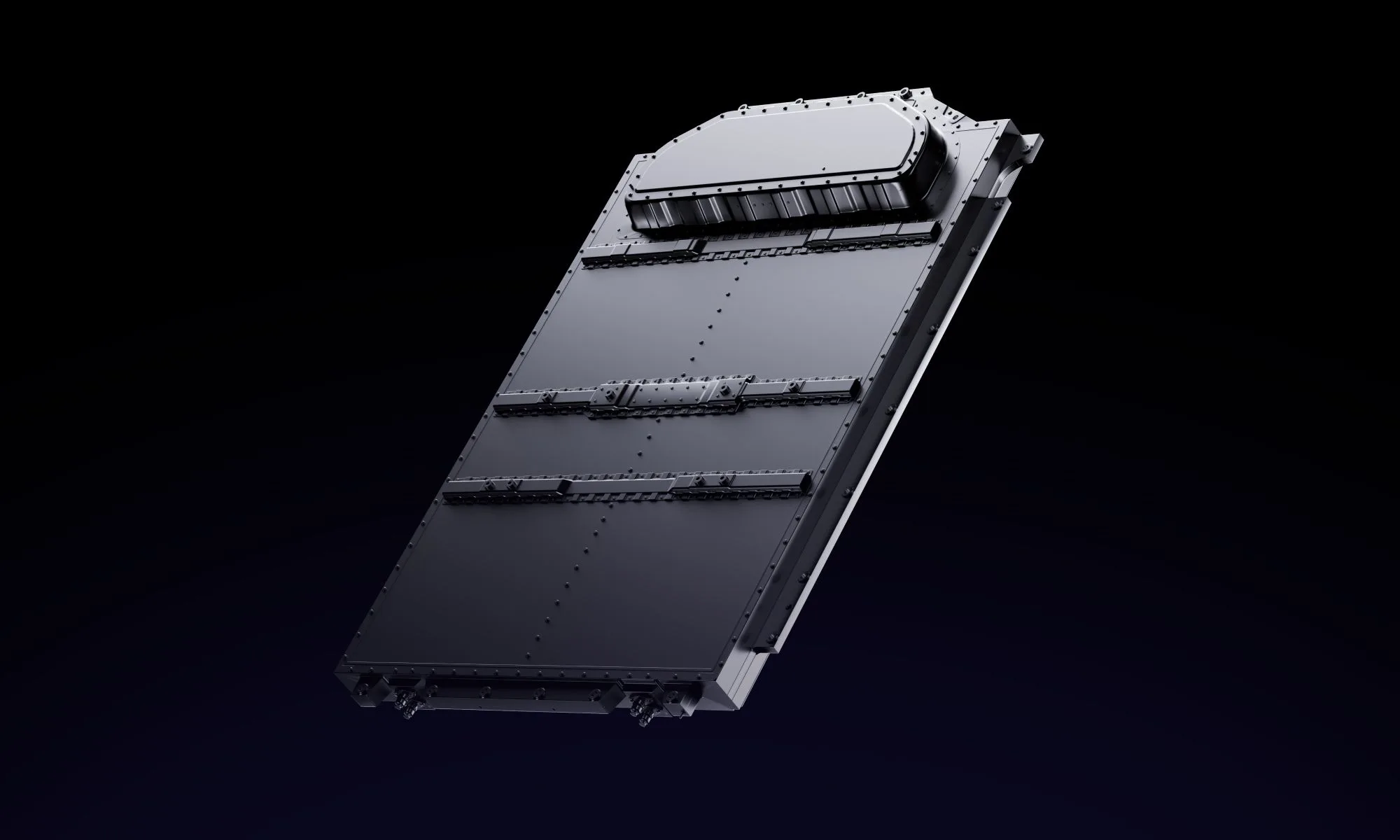

CATL chairman Dr. Robin Zeng states that solid-state batteries, despite their hype for electric vehicles, won’t see large-scale commercialization before 2030. He emphasizes that a production volume of one million vehicles is needed for mass deployment, which is currently unattainable. Initial integration will be limited to premium cars.
The core challenge lies in manufacturing the solid-state interface, where current high-pressure methods cause structural misalignments, leading to high internal resistance and cell degradation. Zeng rates the technology at Technology Readiness Level 4, meaning it’s still in the lab validation phase. Meanwhile, CATL is focusing on conventional liquid-electrolyte and exploring sodium-ion batteries. This cautious assessment from the world’s largest battery maker offers a significant reality check for the industry.
Solid-state batteries have been hyped as the technology that will transform electric vehicles, promising higher energy density, faster charging, and improved safety over the lithium-ion cells powering most cars today. But the head of the world’s largest battery maker says buyers should not hold their breath.
CATL chairman Dr. Robin Zeng told Caijing Magazine (via CarNewsChina) that large-scale commercialization of solid-state batteries will not be achievable before 2030. The company has set a threshold of 1 million vehicles as the production volume required to justify mass deployment, a figure that remains out of reach for the foreseeable future. When solid-state cells do reach the market, Zeng said initial integration will be limited to premium vehicles priced above 250,000 yuan (roughly $37,000).
The manufacturing challenge
The core problem lies at the solid-state interface inside the battery. CATL currently uses warm isostatic pressing at 6,000 atmospheres to bind components, but materials with different compaction densities tend to develop structural misalignments under that pressure.

Those anomalies raise internal resistance and accelerate cell degradation, making high-volume production impractical for now. Zeng placed all-solid-state chemistry at level four on the nine-point Technology Readiness Level (TRL), meaning the technology is still in the laboratory validation and prototype engineering phase.
What CATL is doing in the meantime
While solid-state research continues, CATL is relying on conventional liquid-electrolyte batteries to meet current demand. The company is also exploring sodium-ion chemistry as an alternative platform to reduce supply chain dependence on lithium.
The reality check from CATL’s chairman carries weight given the company’s scale and influence over global battery supply chains. While other manufacturers and research teams continue to make bold claims about solid-state breakthroughs, the company that would actually have to build them at scale is drawing a cautious line.
Hinweis: Externer Inhalt von https://www.digitaltrends.com/cars/the-worlds-biggest-battery-maker-just-pumped-the-brakes-on-solid-state-ev-hype/. Rechte bei den jeweiligen Urhebern. » Mehr… » Melden